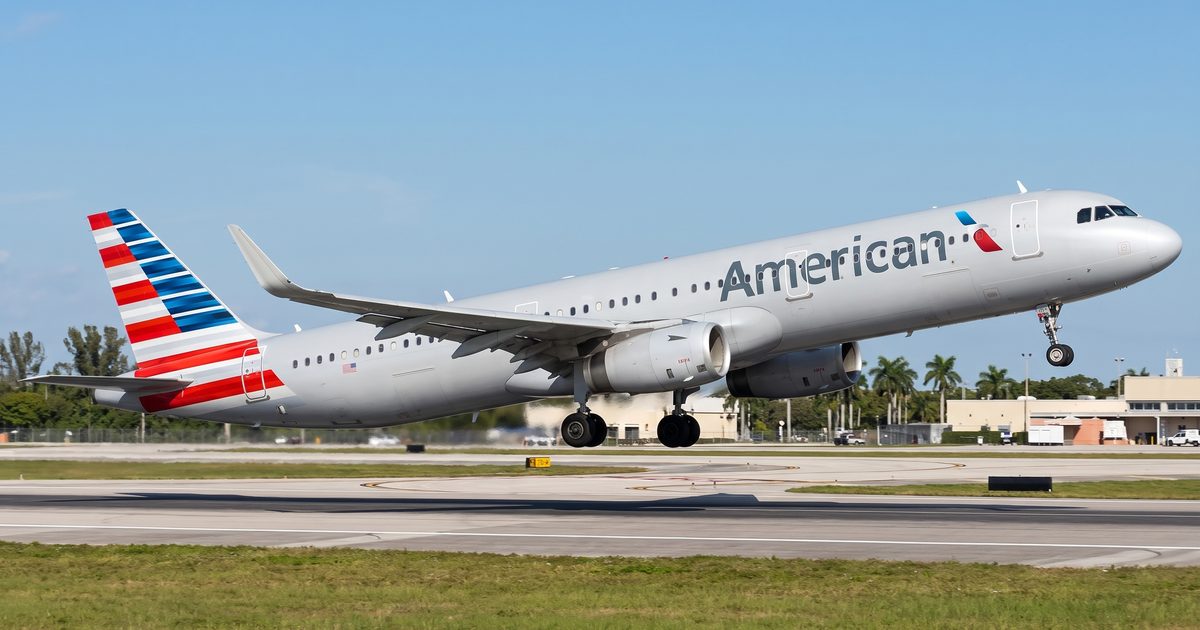
FORT LAUDERDALE, Fla. — American Airlines Flight 1419 was still climbing away from runway 28R on Friday, Nov. 13, when the crew declared PAN PAN. They had hit a flock of birds, and the right-hand engine was vibrating. The Fort Lauderdale bird strike ended the trip to Charlotte, N.C., almost as soon as it began, The Aviation Herald reported.
The Airbus A321 carried 230 people. The crew stopped the climb at 4,000 feet, turned back and landed safely on the same runway about 20 minutes after leaving it.
It was a short flight with real stakes. A loaded narrow-body jet had met a flock at the point in a flight when it leans hardest on its engines. And the crew had a quick choice to make: keep climbing toward Charlotte, or go home.
A PAN PAN call on the climb out of runway 28R
Flight 1419 left its gate at 10:23 a.m. EST and took off at 10:47 a.m. EST, according to FlightAware’s track of the flight. Its filed destination was Charlotte Douglas International Airport.
The jet, registered N154UW, is an A321-200, a member of the Airbus A320 Family. Two CFM56 engines power it.
Then came the birds. As the jet climbed out, the crew reported that they had hit a flock and now had vibrations in the right-hand engine, The Aviation Herald reported. They declared PAN PAN, the radio call pilots use to signal urgency.
How the Fort Lauderdale bird strike cut the flight short
The climb ended at 4,000 feet. Instead of pressing on toward cruising altitude, the crew stopped there and headed back for the runway they had just left.
FlightAware’s data shows the landing at 11:09 a.m. EST, 22 minutes after takeoff. The tracking site marks the Charlotte flight as diverted and lists Fort Lauderdale as the airport where it actually arrived.
The Aviation Herald described the landing on runway 28R as safe. Its report is the only detailed account of the bird strike so far. FlightAware’s track independently confirms the return, but not the cause.
Why a vibrating engine was enough
The crew’s report was short: birds, and vibrations in one engine. That was enough.
An A321 has two engines, and pilots cannot see inside either one from the cockpit. A vibration after a flock strike is a warning that something may have changed in there. With 230 people on board and a runway still close behind, the crew chose the sure thing.
Other crews have faced the same moment. FODNews has reported on a Delta 757 that continued to Atlanta after a dual-engine bird ingestion on takeoff from Orlando and a Turkish cargo 777F that turned back to Maastricht after a bird strike.
Birds are debris in the most unforgiving place
Foreign object debris usually calls to mind a loose bolt or a scrap of metal on the pavement. Birds belong on the same list. They are simply debris that flies.
And they show up where a jet can least afford them. A flock off the departure end of a runway sits right in the path of an aircraft that is low, heavy and climbing. When the two meet, the debris can end up inside a running engine.
That is what makes Flight 1419 worth a second look. The hazard was not on the pavement but in the air just beyond it. It took only a vibration report to bring a narrow-body with 230 people home.
The flight lasted 22 minutes and never reached Charlotte. It ended where it began, on runway 28R, with the jet safely on the ground.
Subscribe to FODNews for continuing coverage of FOD incidents and prevention worldwide.