FAA Reports Airbus A320 Engine Ingests Debris While Taxiing to Gate
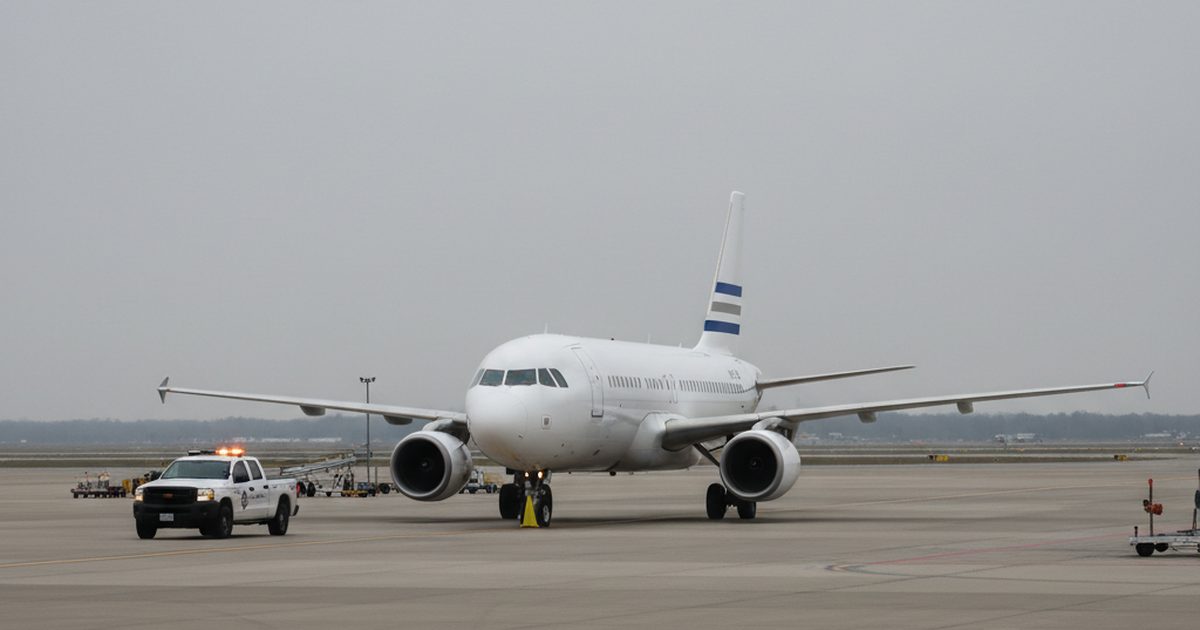
WASHINGTON — The Federal Aviation Administration is investigating an A320 engine FOD ingestion event that occurred on March 18, 2026, in which the crew of an Airbus A320 reported one of the aircraft’s engines ingested debris while taxiing to the gate after landing. No injuries were reported.
Details remain sparse. The FAA has not publicly identified the airline, the airport, or the extent of any engine damage. The investigation is ongoing.
The incident draws attention to a phase of airport operations that FOD prevention programs frequently underestimate: the post-landing taxi.
A320 Engine FOD Ingestion: What Happened
According to the FAA’s incident reporting page, the crew reported debris ingestion while the aircraft was still on the ground, maneuvering after landing. At taxi speeds, engines on narrowbody jets like the A320 run at low thrust settings — but they still generate significant intake airflow capable of drawing loose material from the pavement surface.
The A320 family typically flies with CFM56 or CFM LEAP-1A engines. Both are high-bypass turbofans with large fan diameters, making them susceptible to ground-level debris pickup even at reduced power settings.
As a result, any loose material on taxiways or ramps — bolts, gravel, pavement fragments, hardware left by ground crews — represents a potential ingestion hazard long after the aircraft touches down.
Why Post-Landing Taxi Is a FOD Risk Window
Most FOD awareness focuses on the runway environment during takeoff and landing. Therefore, taxiway and gate approach areas often receive less scrutiny — even though aircraft engines remain running and susceptible throughout the taxi phase.
FAA Advisory Circular 150/5210-24, the agency’s primary guidance document on airport FOD management, specifically highlights how jet blast from aircraft engines can move debris from pavement edges and infields onto active taxiways. Ground support equipment tires can carry broken pavement or debris from aprons onto maneuvering areas. That debris doesn’t vanish when a plane lands — it remains in the path of the next aircraft to taxi through.
The AC also notes that stub taxiways between runways and parallel surfaces are “often overlooked” in inspection routines. The same institutional blind spot that skips those inspections can also skip the gate approach areas where taxiing aircraft slow and engines spool back — still ingesting ambient air at high volume.
Investigation Still Underway
The FAA has not released a timeline for completing the investigation. The agency typically publishes preliminary information on its accidents and incidents page, with findings subject to revision as the investigation proceeds.
The FAA has not disclosed the airline or airport identity. No public reports of engine inspection results have emerged at this time.
This incident is not isolated. Just days earlier, FODNews covered a separate ground-phase debris event: Alaska Airlines tire debris found on Dulles International’s runway following an aircraft ground incident. In February 2026, the FAA also investigated a separate A320 engine issue involving a JetBlue aircraft that returned to Newark Liberty International Airport after the crew reported an engine problem shortly after departure. That event involved departure rather than taxi; nevertheless, it illustrates the recurring vulnerability of A320-family aircraft to ground-related anomalies.
What Airport Operators Should Know
Under FAA AC 150/5210-24, airport operators bear primary responsibility for FOD management on runways and taxiways. Airlines and ground handlers, meanwhile, carry responsibility for gates and apron approaches. This division of responsibility means the taxiway-to-gate transition — the precise zone where this March 18 incident reportedly occurred — sits at the intersection of two accountability domains.
Effective programs, therefore, require coordination between airport operations and airline ground teams. Inspections need to cover the full taxi route, not just the runway environment. Frequency matters too: debris conditions change throughout the day as aircraft, vehicles, and weather introduce new material onto pavement surfaces.
FOD committees that include airport tenants and airline representatives are among the practices recommended in the FAA advisory circular. That coordination is especially critical in high-traffic gate areas where ground support equipment routinely crosses taxi paths.
No Injuries; Investigation Ongoing
The FAA confirmed no injuries occurred in the March 18 event. Nevertheless, engine debris ingestion — even without immediate harm — can cause hidden damage to fan blades, compressor stages, or inlet hardware that may not manifest until a later flight.
Aviation safety professionals note that ground-phase FOD events are often underreported compared to runway incidents, partly because they don’t always produce dramatic outcomes. However, cumulative engine damage from repeated low-level ingestion events can shorten inspection intervals and increase maintenance costs.
FODNews will report further as the FAA investigation develops.
Subscribe to FODNews for ongoing coverage of FOD incidents, safety research, and prevention programs worldwide.
Sources
- FAA Statements on Aviation Accidents and Incidents — Federal Aviation Administration
- FAA Advisory Circular 150/5210-24A: Airport Foreign Object Debris (FOD) Management — Federal Aviation Administration