Bird Strike Tears Nose Radome Off China Southern A330-300 Over Shanghai
SHANGHAI — A China Southern bird strike tore the nose radome off an Airbus A330-300 on Saturday. Flight CZ3554 returned to Shanghai Hongqiao Airport less than 25 minutes after takeoff. Passengers and crew walked away unharmed.
China Southern Airlines flight CZ3554 departed Hongqiao at 12:43 p.m. local time, bound for Shenzhen Bao’an International Airport. The aircraft — registration B-1062, an eight-year-old A330-343 — collided with a bird during initial climb over Songjiang District.
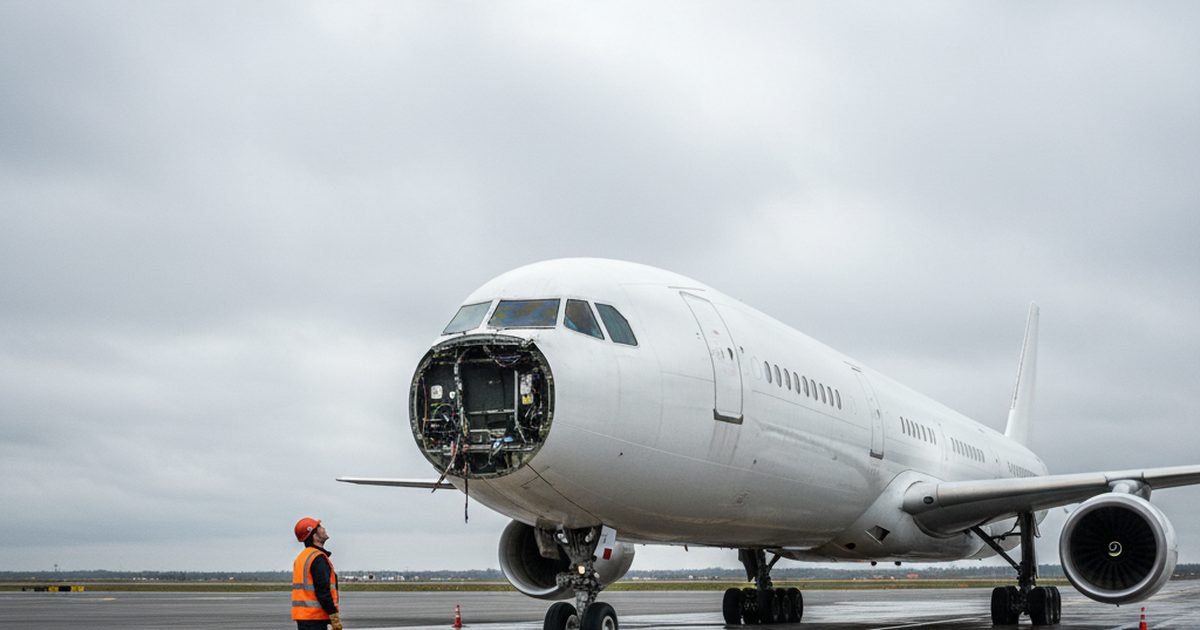
The impact shattered and separated the nose radome, the lightweight composite cover protecting the aircraft’s weather radar antenna. Photos on Chinese social media showed the A330 on the ground, radar dish fully exposed. Radome fragments dangled near the cockpit windows.
China Southern Bird Strike: How the Crew Responded
Following standard emergency procedures, the crew leveled off and entered a holding pattern near Shanghai. The aircraft landed safely at Hongqiao at approximately 1:06 p.m. Ground crews immediately covered the nose section with a protective shield upon arrival.
China Southern confirmed the incident in a statement, saying pilots handled the situation “strictly according to protocol.” The airline activated its emergency response plan and arranged passenger rebooking. A replacement aircraft later departed to complete the Shenzhen journey.
The Aviation Safety Network logged the event as minor aircraft damage. Even so, the loss of an entire nose section drew widespread online attention. Aviation observers called it one of the more dramatic bird strike outcomes in recent years.
Cascading Delays at Hongqiao Hub
The sudden return pressured an already busy Saturday morning at Shanghai Hongqiao. The damaged A330-300 occupied an aircraft stand for inspection, triggering gate adjustments and schedule reshuffles across the hub.
Passengers described uncertainty at the terminal as they awaited rebooking. Some travelers missed connections to Shenzhen; others faced extended waits as airline staff reorganized departures.
Removing a widebody jet from service can trigger knock-on delays across an airline’s route network. China Southern operates one of the world’s largest fleets, maintaining high aircraft utilization on busy domestic corridors.
Bird Strikes: A Persistent Aviation Safety Hazard
Bird strikes are a well-documented hazard in global aviation. According to the FAA Wildlife Strike Database, U.S. airports logged more than 17,000 wildlife strikes in 2022 — underscoring how frequently aircraft and wildlife interact worldwide.
Most encounters cause little or no damage. However, large birds striking an aircraft during the high-energy climb phase can generate substantial kinetic force. A radome is not a structural fuselage component, but its loss exposes radar hardware and alters airflow at the nose.
The Civil Aviation Administration of China requires airlines and airports to report and investigate wildlife strikes. Investigators will work to identify the species involved and assess whether wildlife management protocols at Hongqiao were effective.
Airports near urban areas, wetlands, and agricultural zones face heightened year-round bird activity. Chinese airports deploy deterrents — sound cannons, trained raptors, and habitat controls — to reduce wildlife risk on airfields. For more on how airports manage these hazards, see the FAA’s Wildlife Strike Mitigation Playbook.
What Comes Next for B-1062
Registration B-1062 will require inspection and radome replacement before returning to service. China Southern may need to reposition aircraft or adjust schedules on affected routes in the coming days.
Still, Saturday’s outcome illustrates what rigorous crew training and aircraft safety systems can achieve. The flight ended with a safe landing, no injuries, and a textbook emergency return — exactly as designed.
Subscribe to FODNews for ongoing coverage of wildlife strike incidents, airfield safety investigations, and FOD prevention worldwide.