Skylark Labs Deploys AI FOD Detection System at Commercial Airports Following Indian Navy Carrier Trial
Skylark Labs completed a successful demonstration of its fixed foreign object debris detection system aboard an Indian Navy aircraft carrier March 20, the company announced, and has since moved to deploy the same technology at commercial airports worldwide.
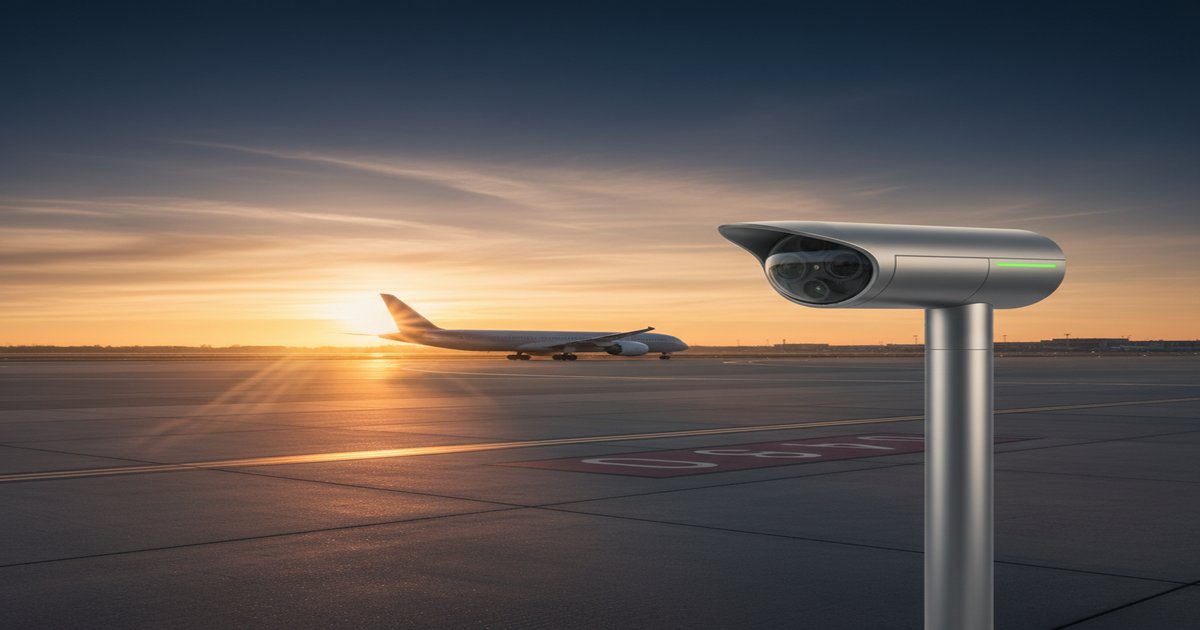
The system uses strategically positioned cameras to continuously scan flight decks and runways, detecting debris as small as a few centimeters, classifying it by type, and transmitting precise coordinates to ground crews — all without interrupting operations.
From Carrier Deck to Commercial Runway
The Indian Navy trial tested the system under some of the harshest conditions in aviation. Aircraft carriers present a uniquely difficult environment: constant aircraft movement, salt spray, vibrations, glare, and high operational tempo make manual FOD walks dangerous and error-prone. A single undetected piece of debris can damage a jet engine or puncture a tire, with consequences far more severe at sea than on land.
According to Skylark Labs’ announcement on PRNewswire, the demonstration validated that the AI system could reliably filter environmental noise unique to at-sea operations while delivering real-time alerts when debris was detected. Debris was automatically classified by type — metal fragments, rubber and other foreign objects — supporting safety investigations and maintenance planning.
“Aircraft carriers are among the most unforgiving environments in naval aviation,” said Amarjot Singh, founder and CEO of Skylark Labs. “This demonstration validated that our fixed detection system can continuously monitor carrier decks, filter environmental noise unique to at-sea operations, and deliver precise alerts so flight crews can act.”
Commercial Airport Deployments Underway
Skylark Labs simultaneously announced deployments at major commercial airports, describing the fixed installation as a 24/7 autonomous solution that eliminates the scheduling constraints of mobile patrol vehicles.
In commercial settings, the system operates the same way as on the carrier: cameras monitor runways continuously, and when debris is detected, precise tarmac coordinates are transmitted to ground operations and air traffic control. The company says no vehicle deployment or operator scheduling is required to initiate a response.
A director of operations at a major commercial airport in India was quoted in the announcement: “We cannot afford to stop operations for debris checks — every minute on the ground costs us. This system runs continuously without any disruption to our schedule, and when something is found, we know exactly where it is.”
Adaptive AI Architecture
The technology is powered by what Skylark Labs calls its Runway Monitoring Intelligence Layer, an adaptive AI framework that runs locally at each deployment site. The local system learns from debris detections, false-positive patterns, and environmental conditions specific to that location.
Those learnings are shared across the company’s entire network of fixed and mobile deployments. Insights from the carrier trial — such as how to filter salt spray or background motion — are made available to land-based airport installations, and vice versa. The company says this creates a self-reinforcing network where each new deployment improves detection accuracy across all others.
The system also builds a longitudinal debris map over time, identifying recurring hotspots and tracing debris origins to specific aircraft operations or maintenance activities. Automated report generation eliminates manual documentation.
Background: iDEX Program and Prior Deployments
The Indian Navy demonstration builds on prior work under India’s iDEX (Innovations for Defence Excellence) program. Skylark Labs received an iDEX contract in December 2022, following a structured development path of prototyping, field trials, and operational validation.
The company also operates a mobile FOD detection platform — the Tracer AI Vehicle — deployed with the Indian Navy and Indian Air Force across multiple active airfield sites over the past two years. The fixed airport system uses the same underlying AI architecture as the mobile units, and the two systems share intelligence in real time.
Automated FOD detection technology at commercial airports has been developing for more than a decade. Skylark Labs’ approach — using optical AI cameras rather than radar or LiDAR — positions it as a lower-infrastructure alternative to systems that have historically required significant capital investment.
The global FOD detection and runway safety market represents what Skylark Labs estimates as a $14 billion opportunity, driven by airports and defense forces worldwide seeking to modernize legacy runway safety systems.
The company is headquartered in Menlo Park, California, with operations in India.
Subscribe to FODNews for ongoing coverage of FOD detection technology and runway safety developments worldwide.
Sources
- PRNewswire: Skylark Labs Conducts Fixed FOD Detection Demonstration Aboard Indian Navy Aircraft Carrier
- PRNewswire: Skylark Labs Deploys Fixed FOD Detection at Commercial Airports
- PRNewswire: Skylark Labs Expands Tracer AI Vehicle Following Indian Navy Deployment
- Naval Technology: Indian Navy Validates Skylark Labs FOD System