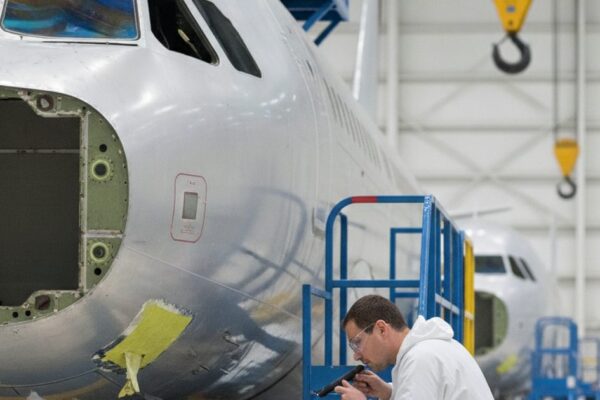
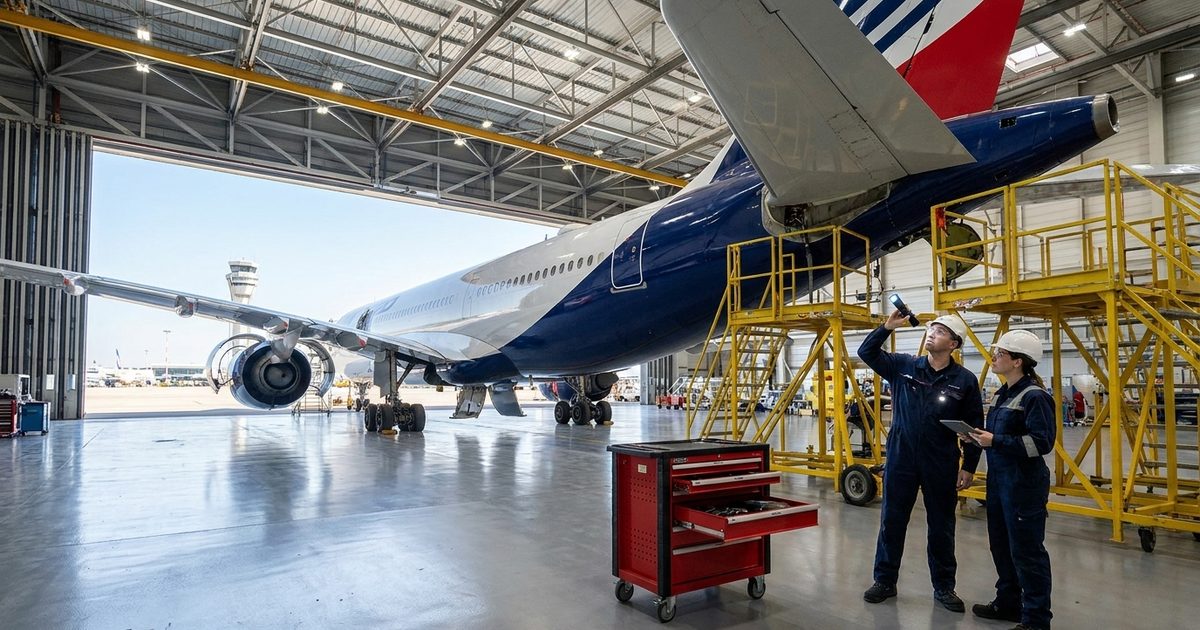
Airbus has asked operators of some in-service A330neo jets to inspect their horizontal tailplanes for stray tools. The A330neo tailplane inspection effort, which began on the factory floor, now reaches airline maintenance hangars worldwide. Airbus confirmed the request Oct. 1-2, 2026. It follows a September 2026 discovery that a mechanic’s tool had been left inside a tailplane during production. That same lapse had already slowed A330neo deliveries over the summer.
A330neo tailplane inspection moves from factory to fleet
Airbus told operators preparing aircraft for already-scheduled maintenance to carry out additional checks of the horizontal tailplane. The manufacturer anticipates that formal inspection requirements could follow later this year, according to Aerotime and AirDataNews, which cited Airbus’s statements. The request is voluntary for now, tied to routine maintenance windows rather than an immediate grounding.
“After having spotted an isolated finding in an aircraft in production, we are committed to discounting similar findings in aircraft currently in service,” Airbus said. Bloomberg News first reported the inspection request. “We do not compromise on quality and safety,” the company added.
The affected population is broad. AirDataNews and Moneycontrol reported that A330neos delivered between January 2021 and July 2026 could potentially require inspection. That span covers years of production rather than a single batch. Airbus is working with the European Union Aviation Safety Agency (EASA) to define the final scope. Airbus expects a complete list of affected aircraft and inspection intervals by mid-November.
No emergency directive, but scrutiny continues
EASA has told Airbus it sees no immediate safety concern for A330neos currently flying. The regulator has not ordered a fleet-wide grounding or emergency inspection, Airbus said. That stance mirrors the agency’s position in September, when the original tailplane finding first surfaced.
The underlying issue traces to a single A330neo under construction. Inspectors found a tool inside the horizontal tailplane structure during a pre-delivery check. Reuters reported at the time that Airbus did not publicly identify the object. A person familiar with the matter described it as a tool left behind during assembly. The find prompted Airbus to inspect every A330neo still in production, a review that nearly halted deliveries. Airbus delivered no A330neos in June or July 2026, and only one — to Starlux Airlines — in August.
How FOD prevention is supposed to work
A tool traveling from an assembly line into a delivered aircraft’s structure is a textbook case of foreign object debris. That is the aerospace term for any item left where it does not belong during manufacturing or maintenance. Production lines typically rely on tool accountability programs to prevent exactly this scenario. Those programs include shadow boards, inventory counts at shift changes, and sign-off checklists that workers complete before closing a structure. SAE International‘s AS9146 standard sets out formal FOD prevention program requirements for aerospace, space and defense organizations. It covers tool control, training and verification steps meant to catch an item before workers seal a part. One slipped through on a tailplane — a structure that workers close up well before final assembly. That underscores why Airbus is now looking at years of prior production rather than a single aircraft.
Airbus has not disclosed which plant or supplier produced the affected tailplane. The company says it has since strengthened manufacturing controls following the September review, though it has not detailed what changed.
For airlines, the near-term cost is additional maintenance time rather than fleet disruption. No operator has grounded aircraft. Airbus’s framing asks customers to inspect “in anticipation” of possible future requirements. That suggests the manufacturer is trying to get ahead of a mandate rather than react to one. Whether that changes depends on what Airbus and EASA agree to by mid-November.
Subscribe to FODNews for continuing coverage of FOD incidents and prevention worldwide.
Sources
- Aerotime — “Airbus asks A330neo airlines to inspect for stray tools” (Oct. 2, 2026)
- Air Data News — “Airbus advises some A330neo operators to anticipate tail inspections” (Oct. 2, 2026)
- Moneycontrol — “Airbus tells airlines to check A330neo jets for stray tools” (Oct. 2, 2026)
- Bloomberg — “Airbus Tells Airlines to Inspect Some A330 Jets for Stray Tools” (Oct. 1, 2026)