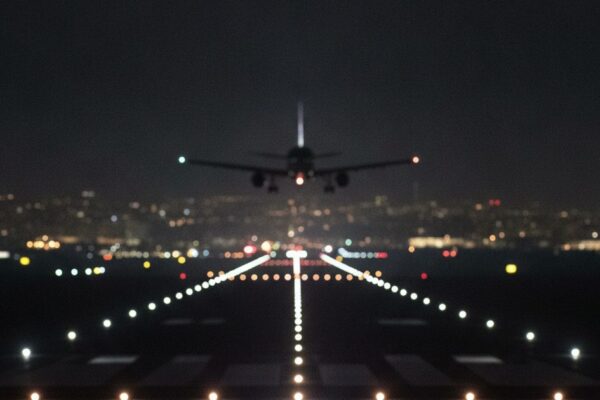
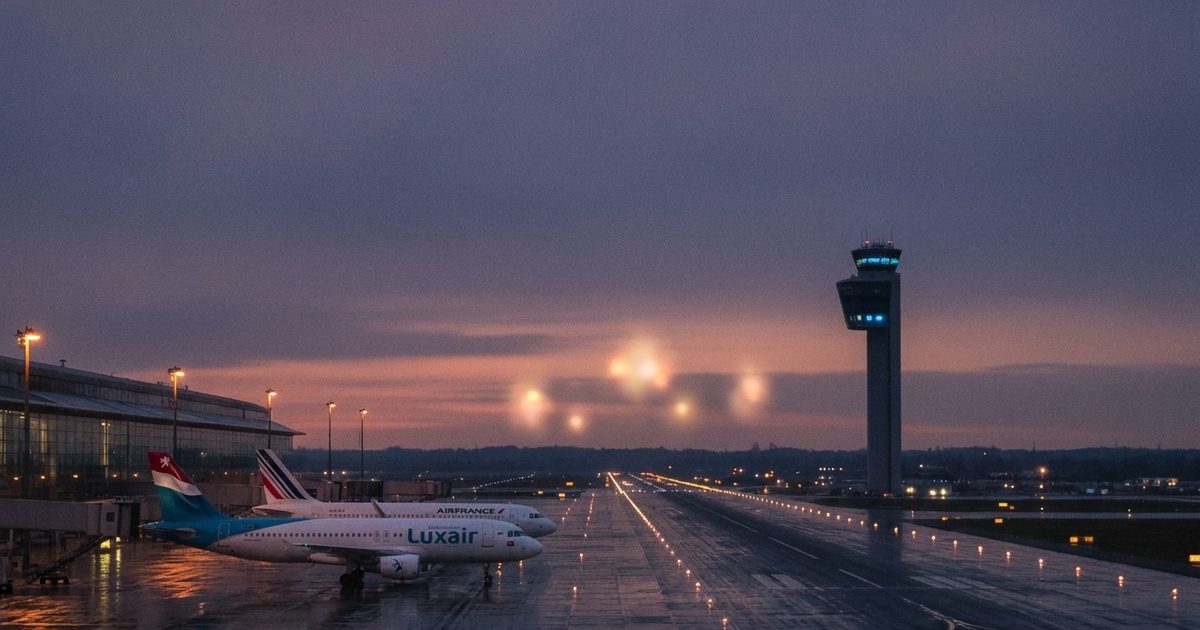
Twice in one week, Luxembourg’s Findel Airport went dark. On September 18, 2026, air traffic control halted all operations after “unidentified and unauthorized” drones were sighted over the airfield, diverting 19 inbound flights and stranding more than 1,800 passengers. Two nights later it happened again, and no drone was recovered either time.
Findel is not an isolated case. It is the latest entry in a growing list of European airport drone incursions that have shut down runways from Dublin to Munich over the past year, almost always without a single drone being intercepted, identified, or traced to an operator. Unexplained aerial objects are grounding commercial aviation across the continent, and Europe still has no reliable way to stop it happening again the next night.
A Year of Shutdowns Nobody Can Fully Explain
The current wave traces back to late 2025. On September 22, 2025, Copenhagen Airport suspended operations for nearly four hours after “two or three large drones” were reported in controlled airspace, forcing more than 100 cancellations; Oslo closed the same night. By November, Brussels and Liege both shut within hours of each other, alongside military installations including Kleine Brogel Air Base, which hosts NATO nuclear-mission aircraft. A Euronews review of more than 24 airports in 12 countries found drone-related disruptions roughly quadrupled between early 2024 and late 2025.
2026 has kept pace. Malaga’s Runway 12 was shut by a drone incursion, and Dublin drew a Garda investigation twice in under two weeks – most recently on September 19, when an Aer Lingus pilot reported a red drone passing within about 20 metres of his jet at 3,200 feet over Dublin Bay (RTE). Brussels saw activity return on consecutive nights in mid-September. None of these incidents ended with a drone in evidence.
The Detection Gap: Why a Sighting Alone Shuts an Airport
The aviation-safety story underneath the geopolitics is simple: airports have no reliable way to confirm what is actually in the sky, so a single visual report is enough to ground everything. Belgian air navigation provider Skeyes halts runway traffic until 30 minutes after the last confirmed sighting, whether or not the object is ever identified.
That threshold exists because the alternative is worse. A drone can disable an engine or shatter a windscreen, and unlike a bird, it can be deliberately steered into an approach corridor. And these are not, by most accounts, toy quadcopters: witnesses and officials describe large craft, some appearing aircraft-sized, that hold a stationary hover or make sudden, erratic movements – behavior no hobby rig manages and no bird mimics. Luxembourg’s prime minister publicly warned of “potentially bigger drones” in the country’s airspace. Detection technology hasn’t caught up: most incursions in this wave were confirmed only by human eyesight, because civilian radar built to track transponder-equipped airliners routinely fails to classify these low-signature craft, especially at night. Germany counted 172 drone-related air traffic disruptions in 2025 alone – a volume outpacing the rollout of counter-drone systems at civilian airports. The hazard doesn’t have to strike an aircraft to shut a hub for hours.
That raises the question that unsettles this whole wave: how, in an era of satellite surveillance, radar networks, and pervasive electronic monitoring, can objects fly over a national airport and vanish without a trace? The uncomfortable answer is that these craft are large enough to be mistaken for aircraft yet still slip through: they fly slowly, hover, and give off little of the radar or transponder signature civilian systems are built to catch, while the sensors and legal authority to hunt them down have lagged years behind. Objects big enough to be seen from the ground are penetrating, loitering over, and slipping away from the airspace defenses of NATO capitals – then vanishing before anyone can bring one down or trace it home.
The Attribution Question: What Officials Have – and Haven’t – Said
Russian “hybrid warfare” is the theory that gets the most attention, but it has firm evidentiary support in exactly one case: Leipzig/Halle, where workers found a drone carrying explosives near a Ukrainian An-124 cargo plane. Germany formally blamed Russia on September 1, and Reuters reported a suspect with alleged GRU ties; Moscow denies involvement.
Leipzig is the exception, not the rule. Luxembourg’s leaders declined to attribute the Findel closures to any actor, calling that “mere speculation” and stating “definite conclusions cannot be drawn.” Belgian officials said the November 2025 wave “bore the hallmark” of Russian interference while admitting they had no proof, and Danish investigators closed their Copenhagen probe unable to confirm drones were present at all. No drone has been recovered from Findel, Brussels, Copenhagen, Oslo, Munich, or Dublin, and no operator has been identified in any of them. Some of these sightings may never be resolved – to a mundane cause, a state actor, or anything else – and the honest position, the one European authorities take in public, is that most of this wave remains officially unexplained.
Which leaves the plainest question of all still open: where are they coming from? No launch site has been pinned down, no recovery has been made, and no operator has stepped forward or been caught. Until investigators can answer that – land the origin, not just the theory – each closure adds another data point to a pattern whose source remains, for now, genuinely unknown.
What Authorities Are Doing About It
The policy response has focused on infrastructure and reporting rather than blame. The EU’s 2026 mandatory drone-FOD reporting regulation requires standardized logging of unauthorized drone activity, aiming to build the continent-wide dataset that is currently missing. Belgium has ordered interceptor drones, and Luxembourg convened an Interministerial Drone Assessment Unit, though its latest update declined to release detail “for security reasons.” This is also not confined to civilian runways. The same wave has repeatedly violated restricted military airspace – Belgian air bases, and, on NATO’s eastern flank, incursions serious enough to trigger fighter-jet scrambles over Romania. That some of Europe’s most sensitive and heavily defended sites are being penetrated as readily as its passenger terminals is, for many officials, the most alarming part of the pattern – even if that broader context has not been extended into a confirmed link for most airport-specific incidents.
An Aviation-Safety Story First
Strip away the geopolitics and what remains is an airspace-safety failure: airports ground flights on a visual report alone because there is no fast, reliable way to confirm, track, or neutralize a drone near a runway. Each Findel-style closure costs diversion fees, crew-duty cascades, and thousands of disrupted journeys – real damage that doesn’t depend on ever answering who was flying the drone. Until Europe closes that detection gap, the pattern will repeat: a sighting, a closure, a diversion cascade, and an investigation that rarely reaches a firm conclusion.
Sources
- Reuters – Luxembourg investigation after drone diversions (Sept. 19, 2026)
- Government of Luxembourg – Interministerial Drone Assessment Unit update
- RTE – Drone reported near a plane descending into Dublin (Sept. 21, 2026)
- Euronews – Fact-checking Europe’s drone problem (Nov. 20, 2025)
- The Guardian – Germany blames Russia for Leipzig airport drone (Sept. 2, 2026)
Subscribe to FODNews for continuing coverage of the European drone incursion wave and its impact on airport operations.