
LATAM Boeing 787 Grounded at Easter Island After Airstairs Truck Shears Off Door
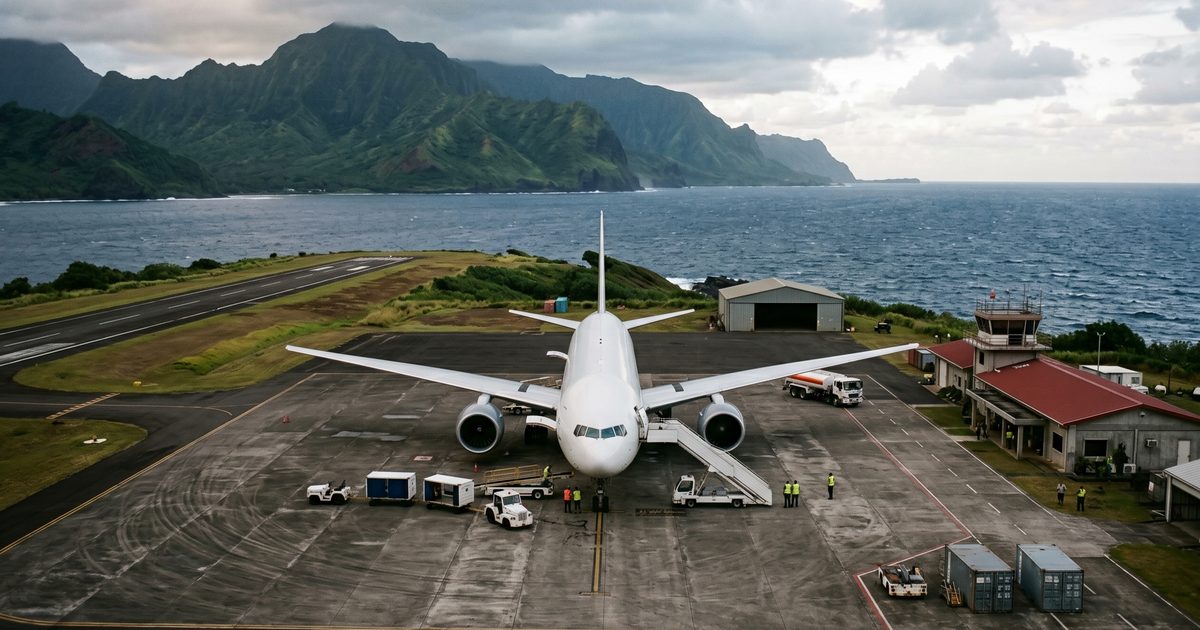
EASTER ISLAND, Chile — A LATAM Airlines Boeing 787-8 Dreamliner has been stranded at one of the world’s most remote commercial airports after an airstairs truck tore the aircraft’s L2 door completely off the fuselage during ground operations.
The incident occurred May 29, 2026, at Mataveri International Airport (IPC/SCIP) on Easter Island following the arrival of flight LA841 from Santiago. The aircraft, registration CC-BBD, MSN 38484, has been grounded at the site since.
No injuries were reported among passengers, crew, or ground personnel, according to the Aviation Safety Network.
GSE Meets Carbon Composite
The airstairs truck struck the port side of the fuselage with enough force to peel the L2 door entirely from the frame — a stark example of the destructive potential of ramp collisions.
Ground support equipment is one of the most common sources of aircraft damage on the ramp, and incidents like this one underscore why ground-handling discipline is a core airfield safety concern.
The Boeing 787‘s fuselage is primarily carbon-fiber reinforced plastic (CFRP), which behaves differently from aluminum under impact. Where metal dents visibly, composites can delaminate internally without obvious surface cracking, making damage assessment significantly more complex.
Before repairs can begin, LATAM will need to fly in a nondestructive testing team with ultrasound scanners to map structural damage around the door frame, according to Simple Flying.
Stranded 1,617 Miles From Help
Mataveri International Airport sits approximately 1,617 miles (2,603 km) from the nearest airfield — one of the most isolated commercial airports on Earth. That geographic reality turns a manageable ramp-damage repair into a complex multi-week recovery operation.
LATAM operates the only regular commercial link between Easter Island and the South American mainland. A replacement door, composite tooling, and maintenance jacks must all be flown in by dedicated charter cargo or a repositioned LATAM 787. The airport has no hangar capable of sheltering a widebody, and composite repairs require controlled temperature and humidity that open-tarmac work on a Pacific island cannot reliably provide.
Ferry Flight or Door Plug: The Recovery Options
The near-term objective is not returning CC-BBD to service — it is making the jet ferry-flyable so it can reach a maintenance depot, most likely LATAM’s facilities in Santiago or São Carlos Airport (QSC) in Brazil.
Options reportedly under consideration include fabricating a temporary structural doubler plate to seal the door aperture, or installing a door plug to restore the fuselage profile for a one-time unpressurized ferry flight.
An unpressurized ferry over the South Pacific would require operating below 10,000 feet — burning significantly more fuel and leaving few emergency diversion options across thousands of miles of open ocean.
CC-BBD entered service with LAN Chile (now LATAM) in 2013 and had no prior recorded incidents in roughly 13 years of operation before May 29.
Ramp Damage: A Persistent and Underreported Hazard
Ground support equipment collisions are among the most common sources of aircraft hull damage in commercial aviation. Pushback tractors, baggage loaders, fuel bowsers, and airstairs all operate within feet of pressurized fuselages under time pressure, often with limited sightlines and variable crew training.
Most ramp-contact events are handled quietly through insurance and internal maintenance records. This incident stands out not because GSE struck an aircraft — that happens at airports globally every week — but because it happened at a location where the infrastructure needed to respond simply does not exist.
The isolation of Easter Island has transformed a ground-handling accident into an object lesson in how consequences of ramp damage scale sharply with remoteness.
Chile’s civil aviation authority, the Dirección General de Aeronáutica Civil (DGAC), has oversight responsibility for the investigation. As of June 1, 2026, CC-BBD remains on the ground at Mataveri International Airport.
Subscribe to FODNews for ongoing coverage of ramp safety, FOD incidents, and aviation ground operations worldwide.