NASCAR’s Debris Problem Isn’t That Different From Yours: What Airfield Managers Can Learn From the Daytona 500 Debate
By FODNews Staff | March 24, 2026
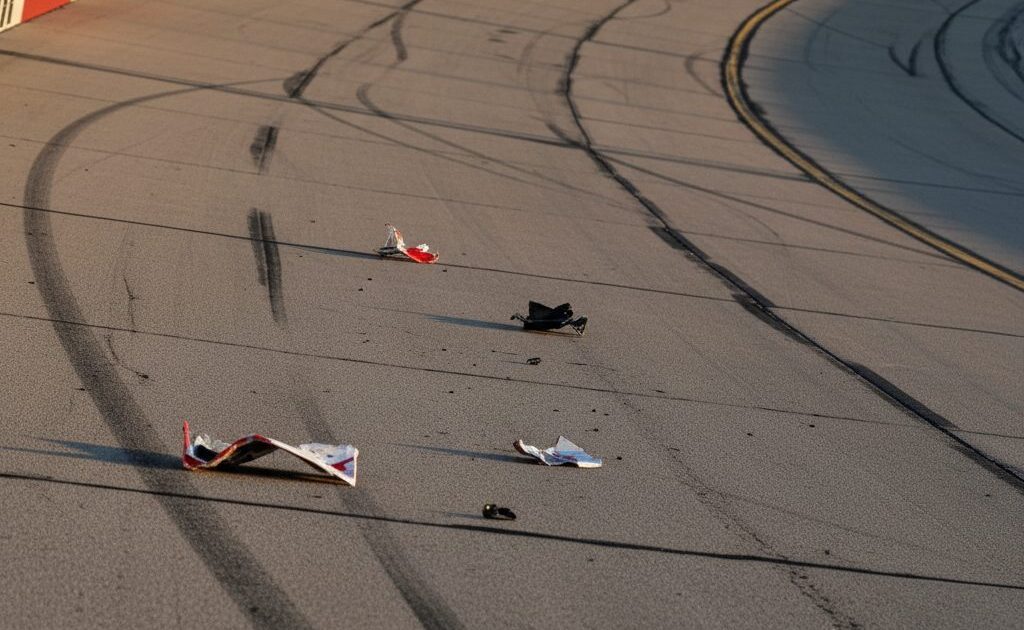
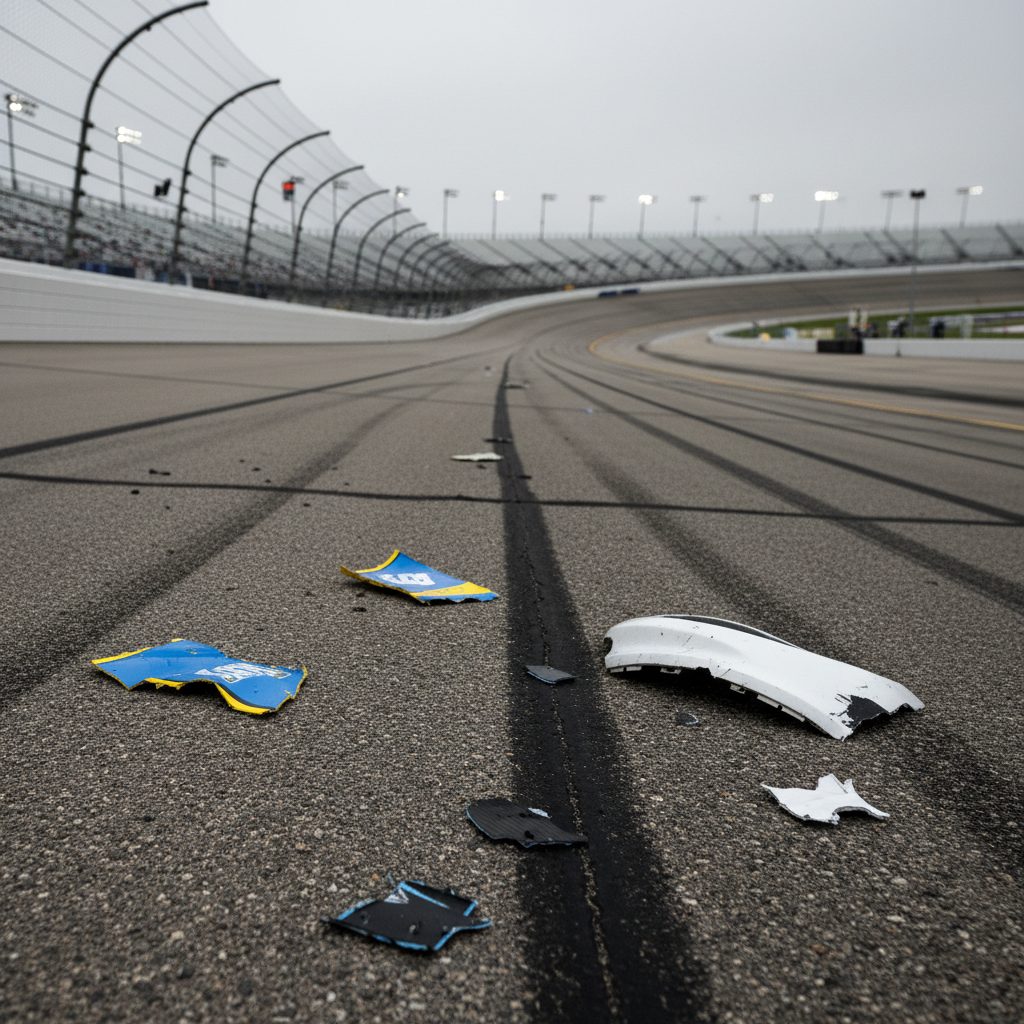
When more than a dozen NASCAR Cup Series cars piled up in Turn 1 on the final lap of the 2026 Daytona 500, officials faced a decision that had no clean answer. Debris littered the banking. Cars sat disabled against the wall. The lead pack was still charging.
NASCAR let the race finish under green. That call — and the debate it sparked — put NASCAR’s debris caution policy under the microscope for the second straight year.
What followed was predictable: drivers questioned the decision, fans argued on social media, and the sanctioning body spent the next week explaining itself. But buried in NASCAR’s clarification was a framework for real-time debris decision-making that should sound familiar to anyone who manages an airfield.
NASCAR’s Debris Caution Policy: What Officials Actually Said
During a February episode of the Hauler Talk podcast, NASCAR Managing Director of Competition Communications Mike Forde pushed back on the notion that the sanctioning body had invented a new rule for the finish. According to reporting from Heavy.com, Forde was direct: the philosophy had been in place since early in the 2025 season.
No rulebook governs whether officials wave or hold a caution flag. They make the call by reading the specific incident in front of them.
“We may see a hit that looks hard, a nose-into-the-wall collision that bent the front clip, and we need to get safety trucks out there as soon as possible,” Forde said. “We did not see that in Daytona.”
The differentiating factor was runoff area. Daytona International Speedway’s long, wide apron gave disabled cars and their drivers room to escape the racing surface. A similar crash at Atlanta Motor Speedway — where runoff space is minimal — would likely have produced an immediate yellow flag.
“Every wreck is a snowflake,” Forde said. “No two wrecks are the same.”
A Policy Built From Driver Feedback
NASCAR’s current debris philosophy didn’t come from a committee. It came from drivers.
Following a controversial held caution at the 2025 Daytona 500, competitors including Denny Hamlin and Christopher Bell told officials directly that they didn’t want to navigate debris fields at full throttle on faith. “You can’t have that,” Forde acknowledged.
That feedback produced a commitment: NASCAR would respond faster to debris on track. The change represented, as Forde put it, “a line in the sand.”
Senior Vice President of Competition Elton Sawyer subsequently consulted with Driver Advisory Council representative Jeff Burton. Together, they reviewed the Daytona 2026 finish to gauge whether competitors approved of how officials handled the call. The sanctioning body wanted to know — not just assume — that drivers were comfortable.
That feedback loop is not an afterthought. It is the mechanism by which the policy was built in the first place.
The Airport Parallel Is Direct
Airport operations managers face structurally identical decisions every time debris appears on a runway, taxiway, or apron.
Do you suspend operations immediately? Do you hold departures and route arriving traffic to an alternate runway while a sweep is conducted? Or do the type, size, and location of the debris — combined with current traffic and weather — suggest a different response?
The pattern extends beyond NASCAR. A cooling fan left on a Mercedes sidepod became live track debris at the 2026 Australian Grand Prix, prompting similar debates about when officials intervene, how fast, and who bears responsibility for that judgment call. The variables change. The decision structure does not.
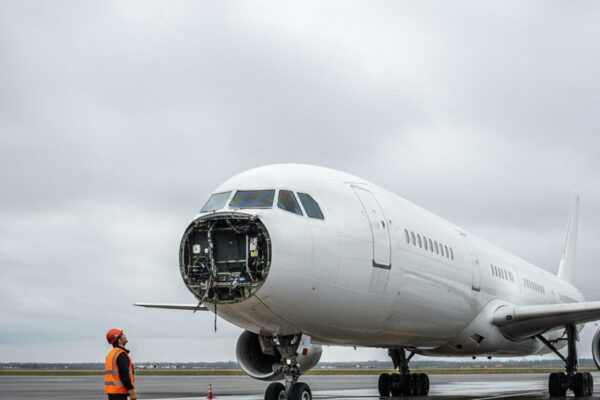
FAA Advisory Circular AC 150/5210-24A is the primary federal guidance document for airport FOD management. It structures debris programs around four areas: prevention, detection, removal, and evaluation. The removal phase — the moment that most directly parallels NASCAR’s caution decision — is governed by contextual judgment, not a single universal response.
The AC directs airports to remove FOD “promptly and as completely as practicable” and to notify air traffic control when debris is found on or near a runway. At certificated airports under 14 CFR Part 139, operations can be suspended pending removal and reinspection. However, the speed and method of that response depend on what was found, where it was found, and what aircraft are moving.
That is the airport equivalent of NASCAR’s runoff-area calculus. Context changes the correct answer.
The ‘Snowflake’ Principle in FOD Management
Forde’s phrase — “every wreck is a snowflake” — captures something that experienced airfield managers already know but that formal documentation often struggles to encode.
A half-inch bolt on the centerline of an active departure runway at a busy commercial airport demands an immediate, aggressive response. The same bolt near an empty general aviation tie-down row at a quiet reliever airport warrants removal, but not necessarily the same operational disruption.
A shredded tire fragment on a runway edge demands different handling than a loose piece of construction signage blown against a perimeter fence. A screw found during a routine FOD walk is logged and removed differently than the same screw found lodged in a nose gear after an arrival.
The debris is never identical. The context is never identical. Experienced operators develop judgment frameworks — mental checklists — that account for debris type, location, operational tempo, and surrounding conditions. The FAA’s four-part structure supports that judgment. It does not replace it.
What Airfield Managers Can Learn From Motorsport
NASCAR’s approach offers three practical observations that translate directly to airport operations.
1. Codify your decision criteria before the incident happens
NASCAR’s policy shift after the 2025 Daytona 500 was deliberate. Officials identified that their response criteria were unclear to drivers and potentially inconsistent across incidents. Consequently, they addressed that gap before the 2026 season started.
Airfield managers can apply the same discipline. Most FOD programs are strong on detection and removal procedures but relatively thin on the decision logic that bridges them. What specific conditions trigger an immediate runway closure versus a priority inspection sweep? What debris types require ATC notification but allow continued operations? Writing that logic down — and reviewing it annually — closes the gap between policy and practice.
2. Build feedback mechanisms from the people on the track
NASCAR didn’t change its debris philosophy based on official observation alone. Drivers said what wasn’t working, and officials listened. The Driver Advisory Council exists precisely to carry that intelligence back into the decision-making process.
Airfield managers who conduct regular FOD walks with ground crew, fuelers, and ramp agents often surface debris patterns and source locations that don’t appear in formal inspection reports. The person fueling aircraft at Gate 14 every morning knows where debris accumulates after rain. That knowledge should feed the FOD program, not sit in someone’s head.
Formal feedback channels — incident reporting, FOD committee meetings, post-incident reviews — are the airport equivalent of the Driver Advisory Council. They work when used.
3. Distinguish between consistent principles and uniform responses
Forde was careful to say NASCAR’s goal is to “maintain consistency” while acknowledging that each incident is different. That distinction matters.
Consistent principles — safety first, respond faster when debris creates unavoidable hazards, communicate decisions to affected parties — can apply consistently even when the tactical response varies by situation. Airfield managers who conflate “consistency” with “same response every time” will either over-respond to minor debris or under-respond to serious hazards, depending on where they set their default.
The FAA’s framework supports this approach. It provides structure without mandating that every piece of FOD produce the same operational response. Managers who internalize that distinction are better equipped to make fast, defensible calls under pressure.
The Decision Is Always Made in Real Time
When the cars piled up in Turn 1 at Daytona, NASCAR officials didn’t consult a manual. They read what was in front of them — the cars, the debris, the runoff, the drivers still moving — and made a call based on trained judgment and a policy built through experience and feedback.
When a pilot reports debris on the runway, the airfield operations manager doesn’t have time for a committee meeting either. They make the call.
The institutions that make those calls well are the ones that did the preparation work in advance: written the criteria, trained the personnel, built the feedback loops, and reviewed decisions after the fact to refine the framework.
NASCAR and the FAA come from different worlds. However, the core problem — how do you manage a debris field, in real time, with safety as the non-negotiable constraint — is the same. The lessons transfer in both directions.
Subscribe to FODNews for independent coverage of FOD incidents and prevention worldwide.
Sources
- Heavy.com — NASCAR Clarifies Yellow Flag Policy Amid Driver Concerns (2026)
- NASCAR.com — Hauler Talk: NASCAR Addresses Policy of Waiting on the Yellow After a Crash (February 17, 2026)
- FAA Advisory Circular AC 150/5210-24A — Airport Foreign Object Debris (FOD) Management (2024)
- FAA AC 150/5210-24A — Full Text (PDF)