Wet Runway Braking Data Called Dangerously Outdated
The National Transportation Safety Board on May 26, 2026, issued three safety recommendations demanding the FAA overhaul how it assesses wet runway braking conditions during heavy rainfall — warning that the current system is leaving pilots with fatally incomplete information when it matters most.
The recommendations target the Runway Condition Assessment Matrix (RCAM), the tool airlines and flight crews use to calculate landing distances on wet runways. The NTSB says the matrix fails to account for the progressive loss of wheel braking friction as rainfall intensity increases — meaning the numbers pilots rely on can be dangerously optimistic in a downpour.
Eleven Accidents Drove the Safety Push
The recommendations didn’t emerge from a single incident. NTSB investigators analyzed 11 runway overrun accidents and incidents between 2008 and 2022, all involving landings on wet runways. Across those cases, a consistent pattern emerged: real-world braking performance degraded far more sharply in heavy rain than the RCAM predicted.
The NTSB also identified a gap in the weather reporting system itself. Aviation weather reports currently top out at a “heavy rain” descriptor set at 0.3 inches per hour. There is no standardized language for anything above that threshold — leaving crews with no way to know whether conditions on the ground are merely heavy or catastrophically worse.
In its second recommendation, the NTSB asked the FAA to add new rainfall intensity descriptors above the 0.3 in/hr ceiling, so pilots can accurately gauge when a wet runway crosses into genuinely unlandable territory.
The Jacksonville Overrun: A Case Study in Viscous Hydroplaning
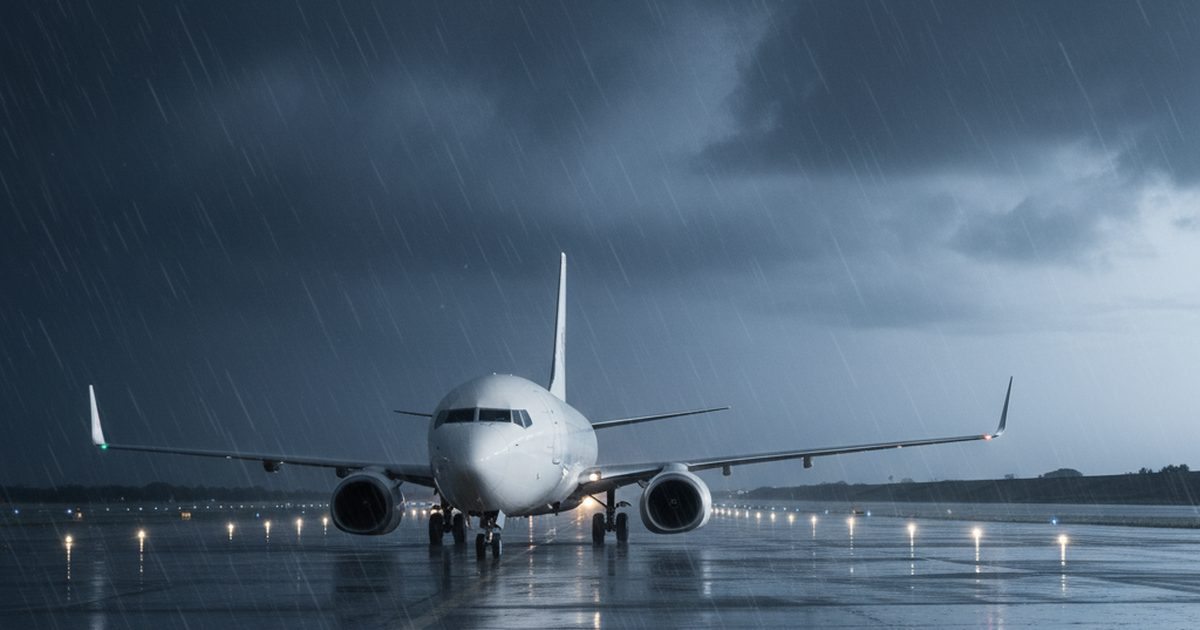
No accident illustrates the hazard more starkly than Miami Air International Flight 293 on May 3, 2019. The Boeing 737-81Q was on approach to Runway 10 at Jacksonville Naval Air Station when it departed the far end of the runway and came to rest in shallow water in the St. Johns River. All 143 people on board survived, but the aircraft was destroyed.
The NTSB determined the probable cause included “an extreme loss of braking friction due to heavy rain and the water depth on the ungrooved runway, which resulted in viscous hydroplaning.” Measured rainfall at the time was two to eight times the 0.3 in/hr heavy rain threshold.
Under those conditions, the NTSB concluded, braking effectiveness is reduced to such an extent that pilots should not attempt to land at all — a threshold that existing RCAM codes and weather descriptors gave the Flight 293 crew no reliable way to identify.
What the FAA Must Change
The three NTSB recommendations call on the FAA to revise the RCAM to reflect how braking friction degrades progressively with increasing rainfall intensity, add standardized weather descriptors for rainfall rates above the current heavy rain ceiling, and develop clearer operational guidance identifying conditions that make landing on a wet runway unsafe.
Full findings appear in Aviation Investigation Report 26-04 (AIR2604), published by the NTSB.
The FAA has not yet publicly responded to the recommendations.
Why It Matters Beyond the Cockpit
Runway overruns are among aviation’s most preventable accident types — and wet-runway events consistently appear in NTSB overrun investigations across both commercial and general aviation. The 11 accidents that underpinned these recommendations span 14 years and multiple aircraft types, suggesting the braking-code gap is systemic, not situational.
Updating the RCAM and weather descriptors won’t eliminate wet-runway risk. But giving crews accurate numbers — and accurate labels for the rain falling outside their cockpit windows — is a prerequisite for making sound go/no-go decisions at the gate and on final approach.
Stay current on runway safety developments and FOD prevention news. Subscribe to the FODNews newsletter for weekly updates.