NAGASAKI, Japan — An ORC bird strike has grounded half a Japanese regional carrier’s operating fleet. As a result, the airline has canceled 118 flights over more than two weeks. Some of Nagasaki’s outlying islands are now cut off from reliable air service.
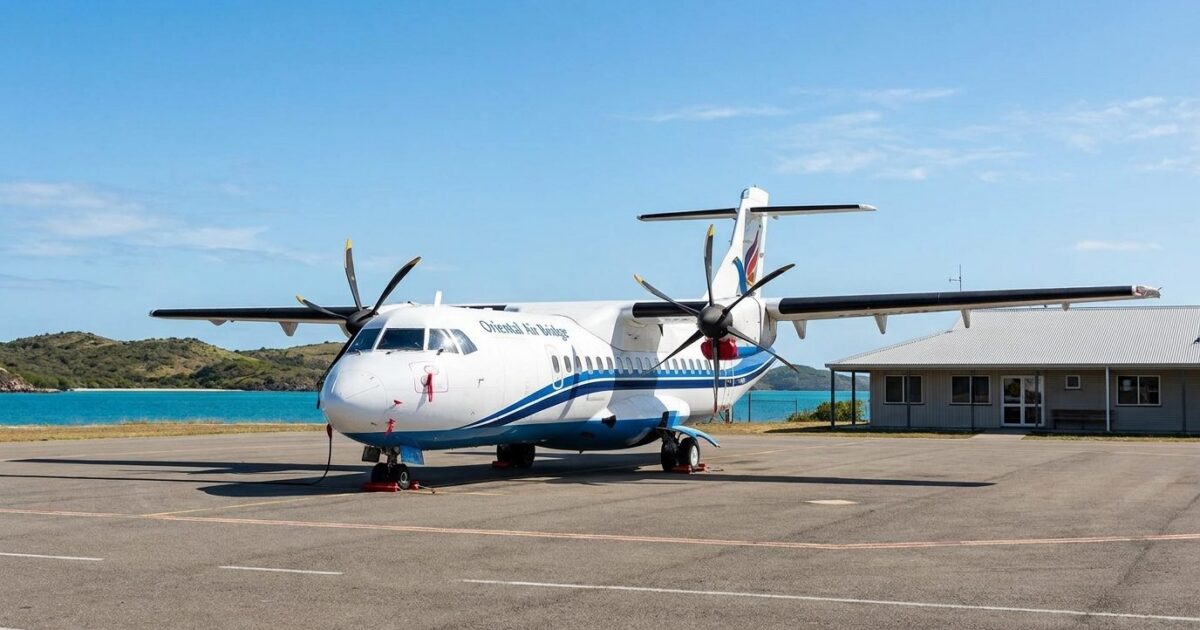
Oriental Air Bridge (ORC) flight 44 was an ATR42-600 turboprop en route from Iki Airport to Nagasaki. The aircraft struck a bird during its takeoff roll at around 5:55 p.m. local time on Sept. 11. Japan’s Civil Aviation Bureau and the airline confirmed the timeline. Local broadcaster NCC identified the bird as a black kite roughly 60 centimeters long. The left engine ingested the bird.
Cockpit instruments initially showed no abnormalities. The crew continued the short flight toward Nagasaki. However, the left engine began vibrating as the aircraft descended. The crew shut it down, declared an emergency, and landed safely at Nagasaki Airport. All 42 people aboard — 39 passengers and three crew members — escaped without injury.
An ORC bird strike with an outsized reach
A post-flight inspection told the real story. The engine had ingested part of the bird and sustained internal damage. Mechanics must fully replace it — a process that takes weeks, not days. For most airlines, that’s a routine, if costly, maintenance event. For ORC, however, it’s close to an operational crisis.
The carrier operates just two aircraft, registered JA10RC and JA20RC. Together they serve Nagasaki, Fukuoka, and the small island communities of Iki, Fukue (Goto), and Tsushima. JA10RC, the aircraft damaged in the strike, is now sidelined for engine replacement. As a result, ORC is running its entire network on a single airplane.
The airline announced on Sept. 15 that it would cancel 118 flights through Sept. 27. It would also delay roughly 10 more, according to the Nagasaki Shimbun. Consequently, the carrier is canceling nearly all Nagasaki-Iki, Nagasaki-Fukue, and Fukuoka-Fukue services outright. Nagasaki-Tsushima flights face delays of three hours and 40 minutes on weekdays. On weekends and holidays, ORC is canceling those flights entirely.
Regional aviation’s thin margin for error
The scale of the disruption shows a weak spot in small-fleet regional aviation. A carrier with no spare aircraft or engine has no cushion. Therefore, even a routine failure can cause weeks of lost service. The communities that depend on ORC feel that loss directly.
Nagasaki’s outer islands have few practical alternatives to air travel. Ferry crossings to Iki and Tsushima can take two to three hours or more. Sea conditions can also make ferries unavailable on short notice.
Bird strikes are common in commercial aviation. Aircraft built to withstand them absorb most strikes without incident. ORC’s official operational notices say the airline will keep updating its website as the reduced schedule evolves. Instead, what made this encounter extraordinary was the arithmetic of ORC’s fleet. Losing one engine out of a two-aircraft operation removes half its capacity in a single stroke.
The incident also shows the wildlife-hazard risk at small regional airports like Iki. Runways there sit close to open terrain, and bird activity is hard to fully control. Japan’s Ministry of Land, Infrastructure, Transport and Tourism tracks bird strike reports nationally. Additionally, low-altitude island routes carry more risk. Strikes like this one tend to happen during takeoff and initial climb.
ORC has not said how long it will take to source and install the replacement engine. Further schedule adjustments remain possible, meanwhile, if the repair timeline slips past Sept. 27.
Similar single-point-of-failure dynamics have surfaced elsewhere this year. A Ryanair-operated 737 MAX bird strike out of Norwich forced an emergency diversion this month. Similarly, a Qantas 737 bird strike near Queenstown did the same. Neither carrier, however, faced ORC’s fleet-capacity constraints.
Stay informed — subscribe to FODNews for daily coverage of FOD incidents and prevention worldwide.
Sources
- Oriental Air Bridge (ORC) — Official Information & Press Releases
- Yomiuri Shimbun — Bird strike on takeoff, emergency declared during descent into Nagasaki (Sept. 16, 2026)
- Nagasaki Shimbun — ORC cancels 118 flights through Sept. 27 after Sept. 11 bird strike
- NIB Nagasaki International Television — Bird ingestion confirmed, engine damage detailed
- NCC Nagasaki Cultural Broadcasting — Black kite strike identified, passenger and crew count confirmed