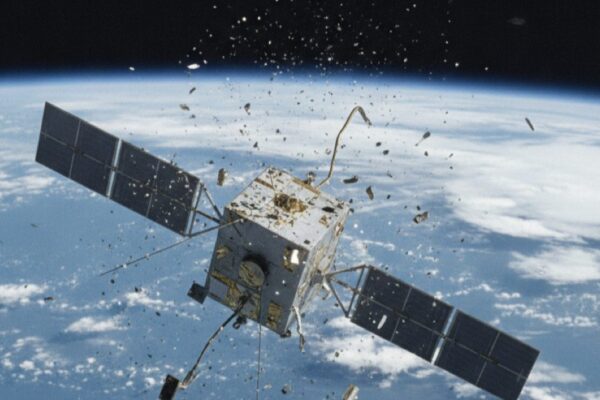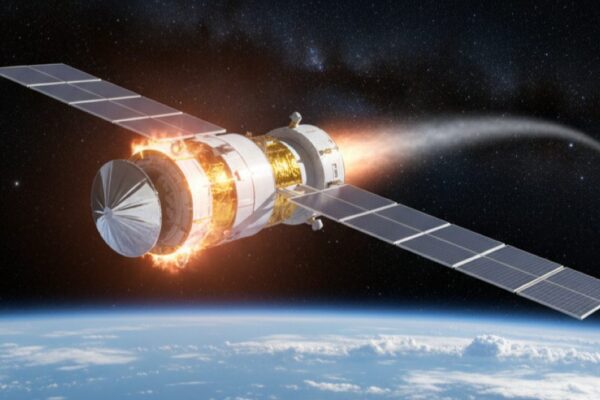
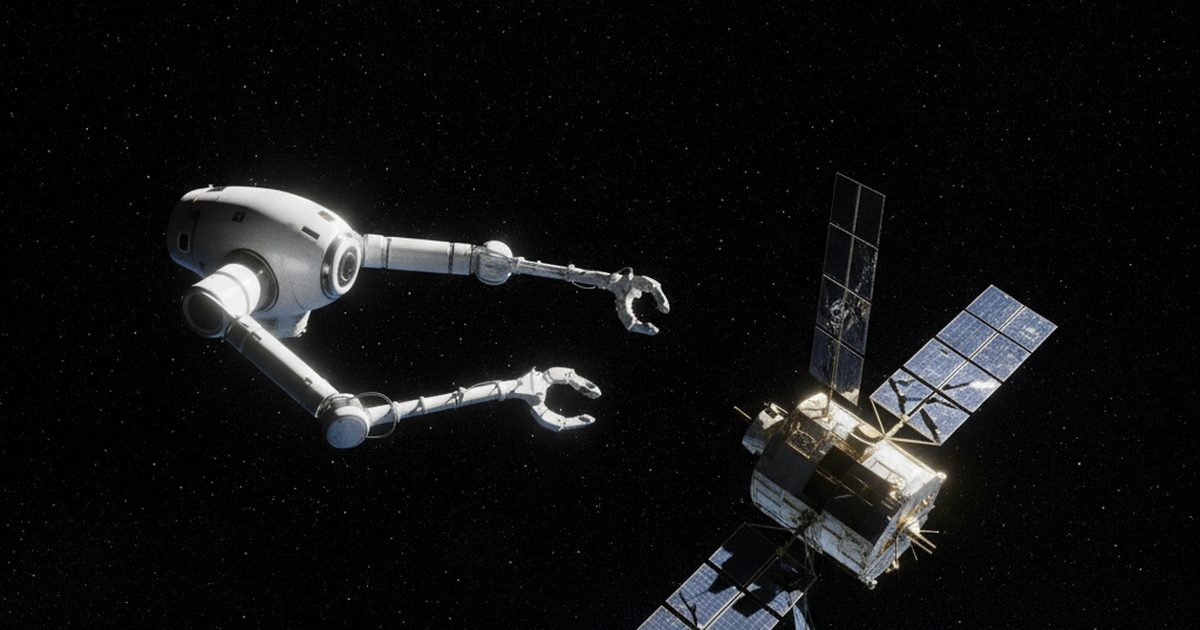
No robotic spacecraft has ever completed an uncontrolled satellite capture — grappling a tumbling, unresponsive object that was never built to be caught. That did not stop the Pentagon from expanding its bet on the capability in August 2026, days before its newest contractor’s rescue mission failed.
On Aug. 13, the Defense Innovation Unit and the Space Development Agency awarded Deorbit-as-a-Service design contracts to Katalyst Space Technologies, D-Orbit and Firefly Aerospace — roughly $8.4 million split three ways, according to Breaking Defense. Six days later, NASA and Katalyst confirmed that Katalyst’s own LINK spacecraft would not capture and reboost the aging Neil Gehrels Swift Observatory.
What Happened to LINK
LINK launched July 3 under a $30 million NASA award. By late July, two of its three reaction wheels had failed during commissioning, sending the spacecraft into a multi-axis spin, The Register reported. Katalyst traced the fault to thermal loading on power electronics, not the capture hardware. Engineers slowed the spin but could not recover enough control, and the capture was called off Aug. 19. LINK closed to within about 12 kilometers of Swift without attempting final approach. Swift now faces an uncontrolled reentry within one to two months.
Cooperative Docking Is Not Uncontrolled Capture
Northrop Grumman holds the only repeated success in satellite servicing, but it solved an easier problem. Its MEV-1 and MEV-2 vehicles docked with Intelsat satellites in 2020 and 2021 — targets that were stable, under ground control, and cooperating. Grappling a dead, tumbling object is unproven. Northrop’s next-generation MRV-1 won’t service anything until 2027, and Starfish Space‘s Otter Pup 2 had not attempted its own first docking with an unprepared satellite as of early September, per GeekWire.
Money Keeps Flowing
The government keeps funding the capability regardless. The SDA committed $52.5 million to Starfish Space in January for satellite disposal, and Space Systems Command added $54.5 million in February for a geostationary servicing vehicle. The August awards are a staged competition, with one company to be selected later for an on-orbit demonstration and services targeted for 2028 — even as the population of dead, uncontrolled objects that would need this capability keeps growing.
One reason the problem stays hard: no regulator requires satellites to carry a standardized fixture a servicer could grab. Both the U.S. Federal Communications Commission and Canada’s ISED considered mandating capture interfaces and declined, leaving companies to build grippers general enough to grab anything. Better debris tracking can locate the dangerous objects, but it cannot remove them.
Subscribe to FODNews for continuing coverage of orbital debris, satellite servicing and space-safety policy.
Sources
- SatNews — “No Robot Has Captured an Uncontrolled Satellite. The Pentagon Is Buying It Anyway.”
- The Register — “No lift for Swift as NASA abandons orbital rescue”
- SpaceNews — “Katalyst Space using Swift reboost spacecraft to aid future satellite servicing missions”
- Breaking Defense — “DoD expands R&D on clearing expired satellites from orbit”
- GeekWire — “Starfish Space shifts its sights to Australian satellite for docking test”
- Northrop Grumman — SpaceLogistics program overview (MEV-1/MEV-2 docking history)