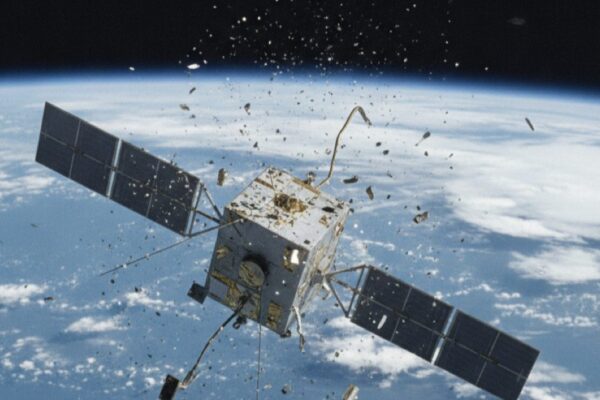
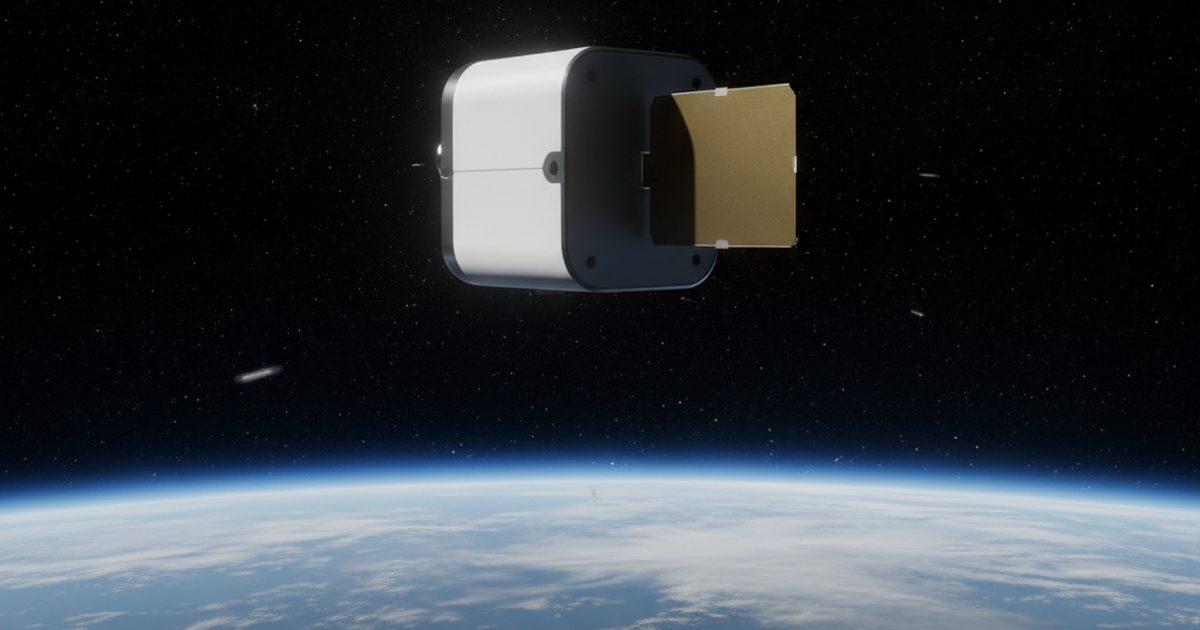
A Munich startup has stepped out of stealth mode with fresh capital for sub-centimeter debris tracking. Project-S builds space-based radar designed to catch orbital debris that ground telescopes can’t see.
Project-S — formally Project-S Space and Beyond Technologies GmbH — announced Sept. 2 that it closed a multi-million-euro seed round. Venture capital firm Uni.Fund II led the round, and SatNews first reported the funding. The financing also pairs private investment with non-dilutive grants. Those grants come from German federal innovation programs, Bavarian state tech funds, and European Space Agency business incubation initiatives.
The company’s pitch centers on a persistent gap in orbital safety: sub-centimeter debris tracking. Most collision-avoidance systems in use today rely on ground-based radar and optical telescopes. Those sensors struggle to resolve objects smaller than a few centimeters, especially in darkness or bad weather. Indeed, objects below that threshold are effectively invisible to today’s tracking networks. Even so, they travel fast enough to disable a satellite or a crewed spacecraft on impact.
What Project-S Is Building
Project-S is developing an integrated stack rather than a single product. SatNews describes four operational layers. Space-based radar payloads detect debris down to millimeter scale from orbit. AI-driven software turns that raw tracking data into ephemeris predictions and conjunction-risk assessments. Decision-support tools then recommend collision-avoidance maneuvers to satellite operators. Longer term, the company is aiming at active debris removal technology.
Separately, the Greek-language outlet Powergame.gr covers the company’s Greek subsidiary, Project-S Hellas. It reported the startup has already built and tested a compact radar demonstrator internally called ATLAS III. A small engineering team took it from design through assembly, testing, and delivery on a compressed schedule, the outlet said. Powergame.gr said exact financial terms of the round were not disclosed.
“The space economy is turning into infrastructure. Safety has to scale at the same pace,” Project-S founder and CEO Leonidas Askianakis said, according to Powergame.gr’s translated quote. “We created Project-S so operators can better understand the smaller threats, make better decisions, and keep access to orbit open for future generations.”
Why Sub-Centimeter Debris Tracking Matters
The size threshold matters because of orbital velocity, not mass. Debris in low Earth orbit typically travels around 7 kilometers per second — roughly 17,500 mph. At that speed, even a paint fleck carries enough kinetic energy to crack a viewport or sever a cable harness. A stray bolt fragment can puncture a pressurized module.
The European Space Agency estimates roughly 1.2 million fragments between 1 and 10 centimeters are already circling Earth. That population is large enough to catastrophically destroy a satellite on contact, as FODNews has reported. Yet nearly a quarter of it goes untracked by any ground-based sensor network. Below the centimeter mark, ESA’s modeling puts the count in the tens of millions. That is the population Project-S is targeting: sub-centimeter debris tracking that ground infrastructure simply cannot perform. Ground stations are limited by weather, darkness, and atmosphere. Orbital sensors are not.
From a €1 Million State Grant to a Multi-Million-Euro Round
Notably, Project-S isn’t a first-time recipient of German public money. Deutsche Welle reported in November 2025 that Askianakis had already secured roughly €1 million in Bavarian state co-funding. At the time, he was a 22-year-old aerospace engineering student at the Technical University of Munich. The state provided that money without taking equity — a structure Askianakis told DW surprised his California-based investors. This week’s round formalizes that early public backing into an institutional seed raise with a lead VC investor.
Project-S also holds a listing with ESA’s Business Incubation Centre network covering Bavaria and northern Germany. The listing describes the system as an “AI-driven, radar-based CubeSat system.” Its active microwave radar can detect small debris “in all conditions.” Onboard AI and ground-based deep learning then provide near-real-time tracking.
Munich’s Growing Orbital-Safety Cluster
The launch places Project-S alongside Vyoma, another Munich-area, ESA-backed venture. Vyoma spun out of the Technical University of Munich in 2020. It is building a constellation of optical telescopes to track orbital debris and monitor satellite maneuvers. Likewise, SatNews frames the two companies as evidence of a forming regional cluster around orbital safety and space traffic management. That cluster is reinforced by Bavaria’s broader space-sector investment. DW reported the state has put more than €245 million into space projects. The Munich region has also landed roughly 40% of Germany’s European Space Agency contract funding since 2015.
That cluster effect matters because LEO congestion is not slowing down. Regulators, insurers, and satellite operators are grappling with a debris environment that could tip into runaway cascades, recent research warns. That risk grows in certain crowded orbital shells if disposal compliance and tracking capability don’t keep pace with megaconstellation growth. Sub-centimeter debris tracking, once a niche research problem, is now seen as a prerequisite for keeping those orbits usable.
Finally, Project-S said the new capital will fund radar-payload ground testing, software integration, and pilot campaigns with commercial satellite operators. Meanwhile, the company plans to expand its Munich engineering team toward flight-qualifying its hardware.
Subscribe to FODNews for ongoing coverage of orbital debris, space safety, and LEO congestion.
Sources
- SatNews — Munich Startup Project-S Emerges from Stealth with Multi-Million-Euro Funding for Orbital Safety Infrastructure
- Powergame.gr — Project-S: Επένδυση εκατομμυρίων από το Uni.Fund για ασφάλεια στο διάστημα
- Deutsche Welle — Student Launches German Startup to Tackle Space Debris
- ESA BIC Bavaria & ESA BIC Northern Germany — Project-S