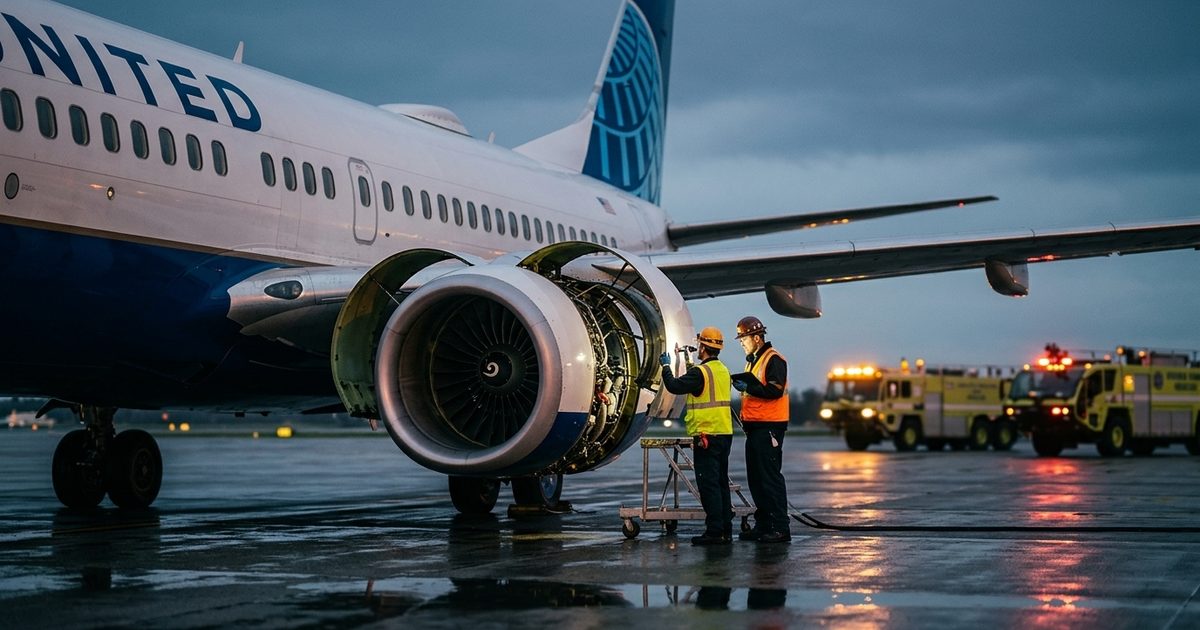
HOUSTON — A United Airlines MAYDAY over Houston made for a tense August 4 departure when a Boeing 737-700’s left engine began making loud banging sounds and exhaust gas temperatures (EGT) spiked well beyond limits. The crew declared an emergency, shut the engine down, and returned safely to George Bush Intercontinental Airport. The cause of the engine failure remained unconfirmed at landing.
United Airlines MAYDAY Houston: ‘Banging Really Loud’ With EGT Over Limits
Flight UAL2181, a Boeing 737-700 (registration N12754) carrying 107 passengers and crew, was bound for New York LaGuardia Airport (LGA) when the left engine malfunctioned shortly after departure.
According to ATC audio from the incident, the crew declared MAYDAY and reported “severe damage” to the engine. They noted no fire warnings. When controllers asked whether a bird strike might be involved, the flight crew was direct about the uncertainty.
“When the engine just started like banging really loud and uh yeah, it was the EGT just went way over the limits,” a crew member told controllers. “It could have been a bird strike. Um, could have been obviously compressor stall. It just started banging really badly and it continued banging around and making really loud noises.”
The crew brought the engine to idle and shut it down after the EGT exceedance. They requested delay vectors to work through checklists before setting up for an ILS approach to Runway 27. The aircraft was carrying approximately five hours of fuel at the time of the emergency.
Birds Spotted on Final — But Cause Remains Unconfirmed
The ambiguity deepened during the return approach. On final back into Houston, the crew spotted two birds off the left wing — adding circumstantial weight to the bird-strike theory but not confirming it.
As the ATC reconstruction audio makes clear, the crew told controllers they were “not quite certain if it was a bird or not.” That distinction matters: a compressor stall and a bird ingestion can produce nearly identical cockpit symptoms — loud banging, EGT spikes, and thrust loss — yet carry very different implications for maintenance, investigation, and prevention. Positive identification typically requires physical inspection, and sometimes feather or tissue analysis, after landing.
According to the FAA’s Wildlife Hazard Mitigation program, bird ingestion can trigger engine surge with characteristics indistinguishable from a compressor stall: audible bangs, vibration, abnormal EGT readings, and loss of thrust.
Safe Landing, Runway Stop for Inspection
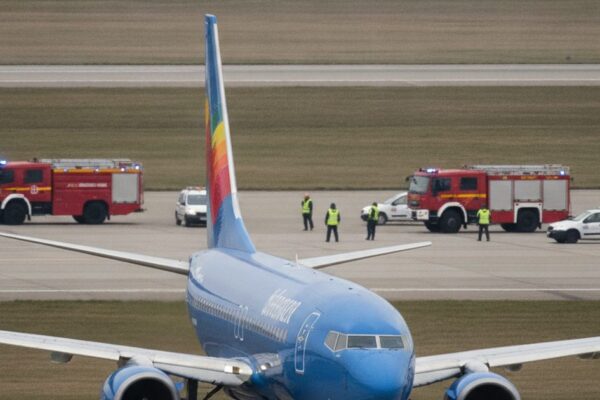
The aircraft landed safely on one engine and stopped on the runway for inspection by emergency services. About 20 minutes later it was towed clear. No injuries were reported.
The crew’s composure throughout was notable. They methodically worked checklists, kept communications calm and controlled with ATC, and safely returned 107 people to the ground despite real uncertainty about what had happened to the engine.
Why This Matters for Airport Wildlife Management
Incidents like this illustrate a persistent challenge in aviation safety: early engine-event diagnosis is often ambiguous, and that ambiguity can delay wildlife-management responses at airports.
The FAA’s National Wildlife Strike Database has recorded more than 310,000 strike reports from over 2,342 U.S. airports since 1990. Engines are among the most frequently damaged components. A large-bird ingestion on departure can have severe consequences.
IAH sits in a major migratory bird corridor along the Texas Gulf Coast — a factor airport wildlife programs must weigh year-round. Whether or not this specific event proves to be a bird strike, the departure-corridor hazard it highlights is real.
Similar incidents have shown how quickly an ambiguous engine event can escalate. In 2026, a JetBlue A321 aborted its takeoff after a confirmed bird strike, and an American Airlines A321 sustained bird-strike damage to its radome at DFW — underscoring that wildlife hazards remain a front-line operational concern across the industry.
The NTSB and FAA have not announced a formal investigation into the UAL2181 event as of publication. FODNews will update this report as findings become available.
Subscribe to FODNews for ongoing coverage of FOD incidents, wildlife strikes, and airport safety worldwide.