JetBlue A320 Strikes Coyote on Takeoff Roll at Providence TF Green, Returns Safely
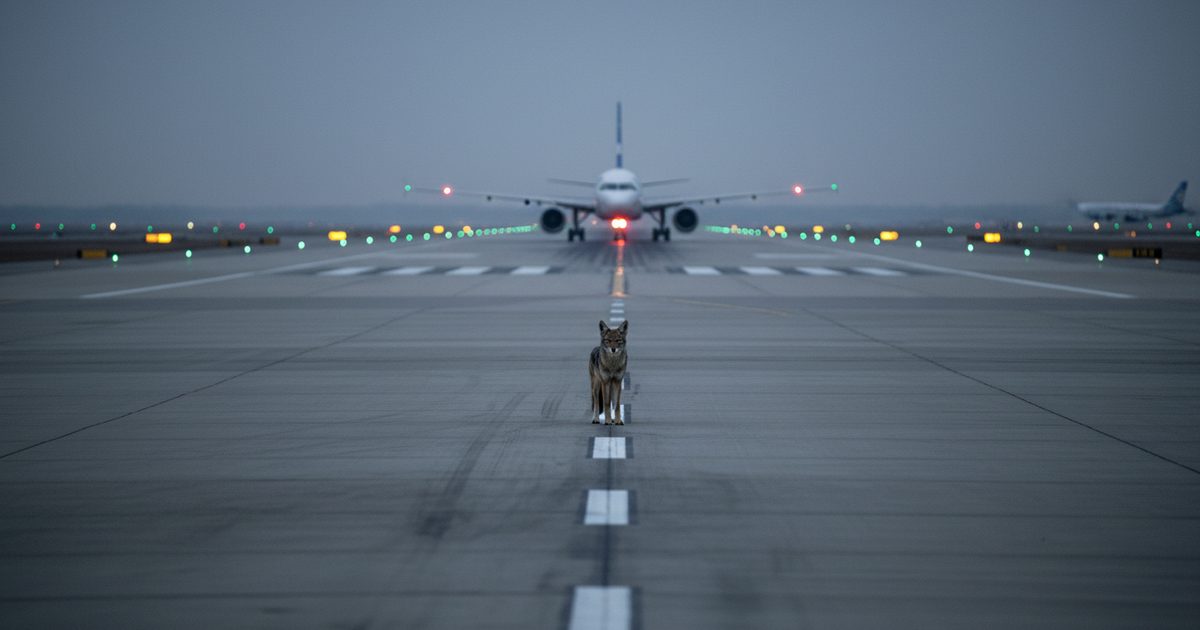
A JetBlue Airbus A320 struck a coyote during its takeoff roll at T.F. Green International Airport in Providence, Rhode Island, on March 24, 2026, prompting the crew to return for inspection before continuing to New York. No one was injured, and the aircraft was found undamaged.
Flight 1129, bound for John F. Kennedy International Airport, had just begun its takeoff run when the aircraft made contact with the animal. Passengers heard a loud thud.
“We were up in the air for about 10 to 15 minutes and then all of a sudden the captain came on and said, ‘This is the flight crew. If anybody heard that thud, we hit a coyote,'” said Erin Drozda, a passenger from Woonsocket. “We thought it was actually a joke at first. We were like, is that code for something else?”
Swift Response on the Ground
After landing safely back at T.F. Green, the aircraft was met by fire department units, police and EMS personnel on the runway. All passengers deplaned while maintenance crews conducted a thorough inspection.
JetBlue confirmed the contact in a statement: “JetBlue flight 1129 with service from Providence (PVD) to New York (JFK) returned to Providence out of an abundance of caution following a report of contact between the aircraft’s landing gear and wildlife on the runway while taking off. The flight landed safely and a full inspection was done on the aircraft with no issues reported. The flight later continued to JFK without further incident.”
A spokesperson for T.F. Green confirmed the runway remained open and no other flights were impacted. For Drozda, the disruption meant missing her connecting flight to Costa Rica.
A Pattern at T.F. Green
The March 24 incident is not the first time coyotes have been documented at T.F. Green. Airport records covering 2009 through 2014 show 18 coyotes were killed as part of the airport’s wildlife control program during that period, along with more than 3,000 birds.
In 2022, the airport issued a request for proposals for wildlife management services, though officials have not publicly disclosed the scope or outcome of those efforts.
Rhode Island is home to a growing coyote population, with sightings common in suburban areas near the airport. Coyotes are most active around dawn and dusk — periods that overlap with peak flight operations.
Coyotes Among Most Common Land Strikes
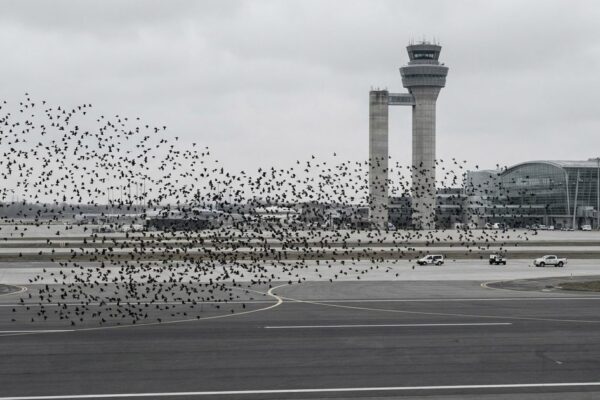
While bird strikes dominate the aviation wildlife strike record, coyote encounters on runways represent a persistent hazard at airports across the country.
According to the FAA’s Wildlife Strike Report covering 1990–2024, U.S. commercial aircraft reported 932 coyote strike incidents over that 34-year span, accumulating an estimated $5 million in damage costs. The FAA identifies coyotes as the most commonly struck carnivore species in American aviation.
Most coyote strikes occur during the takeoff roll or landing run, when aircraft are moving at high speed along pavement — exactly the conditions present on March 24 at T.F. Green.
Not an Isolated Event
The Providence incident follows a similar event at Chicago O’Hare International Airport in January 2025, when a United Airlines Boeing 737 MAX 9 struck a coyote during its takeoff roll on a flight bound for Phoenix. The FAA’s Aviation Safety Information Analysis and Sharing system confirmed the aircraft sustained minor right nose gear damage before safely returning to O’Hare and returning to service the same day.
Both events underscore a challenge that is not unique to any single region or airport type. Coyotes are highly adaptable animals capable of breaching perimeter fencing and traversing large, open paved surfaces — characteristics that make airfield environments particularly difficult to secure against them.
Wildlife Management Remains Complex
Federal regulations require Part 139-certificated airports — which include commercial service airports like T.F. Green — to maintain wildlife hazard management programs. Those programs typically include habitat modification, exclusion fencing, trapping and lethal removal.
However, as the FAA’s own data shows, strikes continue to occur even at airports with active programs. There is no universal solution. Coyote populations in many parts of the United States have expanded in recent decades, increasing pressure on airport perimeter controls.
The JetBlue flight resumed its route to JFK after inspection, and T.F. Green continued normal operations throughout the morning.
Subscribe to FODNews for independent reporting on foreign object debris incidents and aviation safety worldwide.
Sources
- CBS News Boston — JetBlue flight to NYC hit coyote on takeoff at Rhode Island airport (March 24, 2026)
- Simple Flying — JetBlue Flight Halted After Bizarre Runway Encounter With Coyote (March 25, 2026)
- FAA — Wildlife Strikes to Civil Aircraft in the United States, 1990–2024
- Simple Flying — United Airlines Boeing 737 MAX 9 Collides With Coyote In Chicago (January 2025)