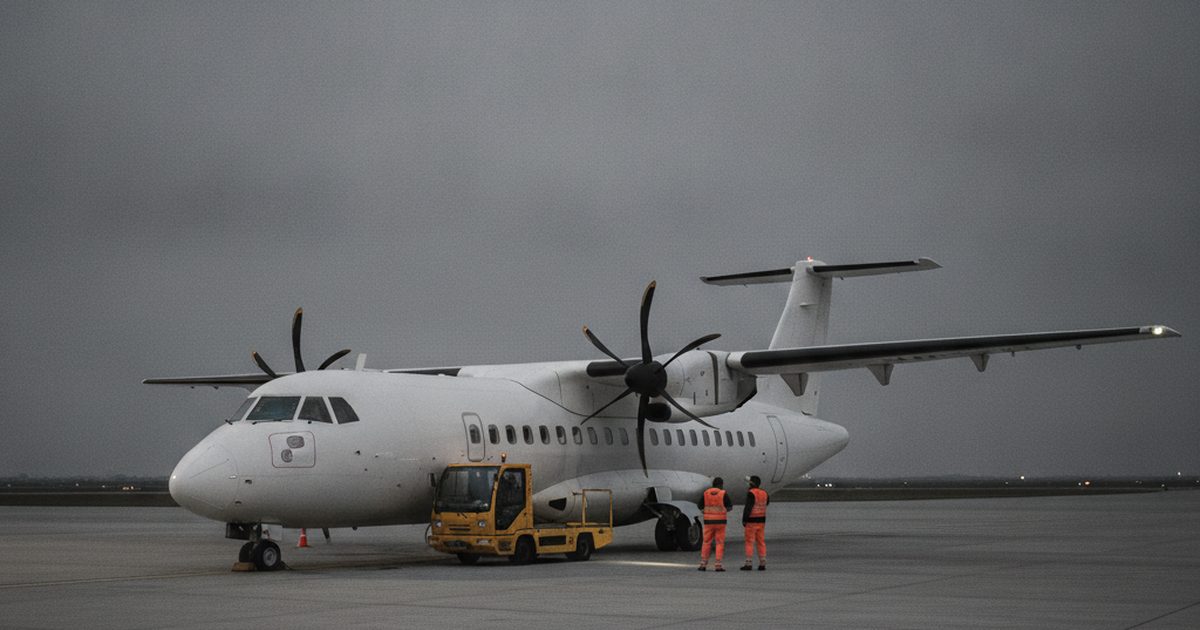
BELGRADE — A SkyPartner ground service vehicle struck an Air Serbia ATR 72-600 on the ramp at Belgrade Nikola Tesla Airport on July 28, 2026. The Air Serbia ATR damage proved severe, grounding the aircraft — registered YU-ASF — for approximately three months. SkyPartner was servicing a different airline at the time, adding a cross-carrier dimension to an already serious ramp safety incident.
Air Serbia pulled YU-ASF from service pending inspections and repairs. The airline estimates the turboprop will be unavailable for roughly 90 days. That timeline adds unusual strain to its regional fleet during the peak summer period.
Air Serbia ATR Damage: Equipment Was Servicing Another Carrier
According to EX-YU Aviation News, SkyPartner’s equipment struck the Air Serbia aircraft while serving a separate carrier. That detail matters. The Air Serbia ATR 72 was not the active work site when contact occurred.
SkyPartner is one of three licensed ground handlers at Belgrade Nikola Tesla Airport. Founded in 2012, the company draws financial backing from French firms Group Europe Handling and SAMSIC Assistance. It holds ramp contracts with several carriers at Belgrade. Serbian media report it serves as the primary Wizz Air handler at the airport.
Air Serbia declined to name the airline being serviced at the time. Nevertheless, the carrier confirmed that regulatory authorities have opened an investigation.
Three-Month Grounding Forces Mid-Season Adjustments
The timing amplifies the operational impact. ATR 72 turboprops are central to Air Serbia’s regional network. They connect Belgrade to shorter-haul destinations across the Balkans, Central Europe, and the Mediterranean. These are routes where turboprops outperform larger narrowbodies on efficiency.
Air Serbia warned of “schedule changes, aircraft substitutions or other operational adjustments” during the summer season. The airline apologized to affected passengers and committed to minimizing disruption.
Substitution on turboprop routes is rarely straightforward. Wet-lease arrangements add cost. Rerouting passengers via larger jets adds inconvenience. Peak summer demand compounds both challenges.
A Recurring Pattern at Crowded Ramps
The Belgrade incident is not isolated. Two weeks earlier, a NAHCO baggage conveyor vehicle tore into an Air Peace Airbus A320 engine at Lagos Murtala Muhammed Airport. That strike rendered the A320 totally unserviceable. FODNews reported on the NAHCO ground truck strike on the Air Peace A320 at Lagos. Nigerian regulators attributed the collision in part to the operator suffering a medical emergency at the controls.
Similarly, a LATAM Boeing 787 was grounded at Easter Island after airstairs caused structural damage — another case where ground equipment contact produced a weeks-long repair timeline rather than the quick turnaround operators budget for.
The events share a common mechanism. As airports accommodate more airlines and contract ramp work to multiple competing handlers, cross-carrier equipment strikes become more likely. Consequently, when collisions occur, a carrier ends up bearing costs for damage from equipment it neither owns nor controls.
The European Union Aviation Safety Agency (EASA) has noted that ground accidents account for a significant share of commercial aircraft damage each year. Vehicle-to-aircraft strikes rank among the leading causes. Most events do not injure passengers. However, they can ground aircraft for days or months depending on structural contact severity.
Investigation Ongoing
Serbian aviation authorities are examining the July 28 event, Air Serbia confirmed. So far, no public details cover the specific equipment involved, the airframe contact point, or the conditions that led to the strike.
Air Serbia will continue updating passengers as information becomes available. Travelers on routes affected by the YU-ASF grounding should monitor airline communications for schedule changes in the weeks ahead.
If the repair timeline holds, the aircraft should return to service in late October 2026.
Subscribe to FODNews for daily coverage of FOD incidents, ramp safety events, and aviation safety investigations worldwide.