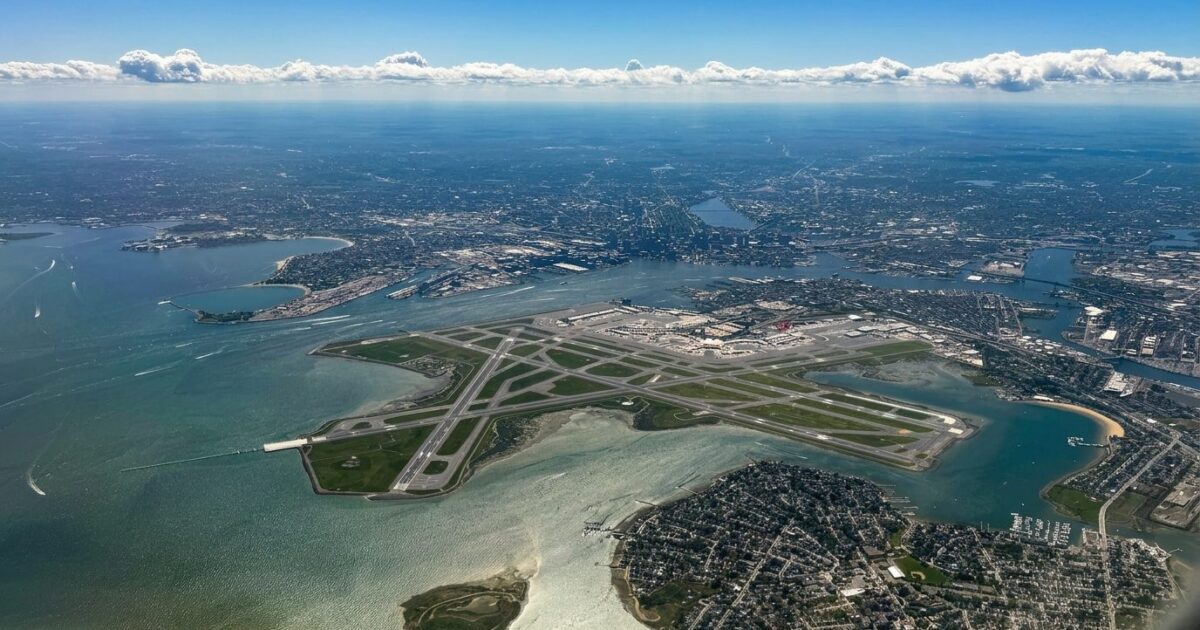
An air traffic controller at Boston Logan International Airport caused a runway incursion on June 20, 2026, simultaneously clearing a Delta Air Lines Airbus A319 to land and an American Airlines Boeing 737-800 to depart on intersecting runways. The clearance conflict placed 135 people within an estimated 300 feet of a collision before the Delta crew aborted their approach and climbed away.
The incident is among the most serious runway incursions at a U.S. airport in 2026. Both the Federal Aviation Administration and the National Transportation Safety Board have opened formal investigations.
How Boston Logan’s Runway Incursion Unfolded
Delta Flight 2351 was on final approach to Runway 33L from Dallas/Fort Worth at approximately 11:34 a.m. ET. The flight carried 129 passengers and six crew members. The tower controller had already cleared American Airlines Flight 3161, a Boeing 737-800 bound for Charlotte, to line up and hold on Runway 27. That runway crosses 33L approximately 2,300 feet from the landing threshold — well inside the touchdown zone.
The controller then issued clearances to three other aircraft before returning to American Flight 3161 with a takeoff clearance. The American crew acknowledged and began their roll. For approximately 40 seconds, neither the controller nor any automated system flagged the error. A landing aircraft and a departing aircraft had both been cleared for the same intersection.
The Delta crew, crossing the 33L threshold, spotted the accelerating 737-800 from the right and called a go-around. Using Flightradar24 data, aviation safety analyst Todd Curtis estimated the aircraft came within approximately 300 feet of each other. The Delta pilots climbed more than 2,000 feet, circled, and landed safely on a second approach. No injuries were reported among the 135 people aboard.
Surveillance Technology Was Running. It Did Not Alert.
Boston Logan operates ASDE-X — Airport Surface Detection Equipment, Model X — the FAA’s primary runway incursion detection system. It is deployed at 35 of the nation’s busiest airports. ASDE-X integrates radar, multilateration, and ADS-B data to track surface traffic. Its automated alerts are designed to warn controllers of potential conflicts before they escalate.
At Logan on June 20, ASDE-X was active. It generated no alert before the Delta crew initiated the go-around.
ATC audio released after the incident shows the controller was unaware of the conflict until the Delta crew called it. A pilot on the frequency confirmed that American Flight 3161 had, in fact, been cleared for takeoff. A National Air Traffic Controllers Association spokesperson declined to comment, citing the pending investigation.
The Boston failure is not the first time ASDE-X has fallen short in 2026. Earlier this year, NTSB investigators found ASDE-X failed to track a fire truck on an active runway at LaGuardia.
FAA and NTSB Open Parallel Investigations
The FAA opened a high-priority formal investigation the same day. The NTSB subsequently opened its own inquiry, treating the June 20 event as a significant runway safety incident. It is one of the few 2026 cases subject to parallel federal investigations.
The incident came up in a Senate Commerce Subcommittee hearing on aviation safety the following week. Sen. Jerry Moran of Kansas cited it alongside other 2026 near misses as evidence of systemic vulnerabilities. Rep. Stephen Lynch of Massachusetts separately asked the NTSB to expand its investigation. Lynch requested review of a June 21 go-around — a separate Delta flight that aborted at Logan at approximately 5:45 p.m. The FAA classified that event as a routine go-around with separation maintained.
The Boston event is at least the third serious runway incursion at a U.S. airport in 2026. It is also the second where an ATC clearance conflict placed commercial jets on a collision course. FODNews analysis of the LaGuardia crash documented simultaneous system failures; investigators may find a similar pattern at Logan. The FAA has separately been piloting AI-based runway safety monitoring to flag high-risk configurations in real time.
As of June 26, neither agency has announced a preliminary report, probable cause, or procedural changes at Logan. Both investigations remain open.
Stay informed — subscribe to FODNews for daily coverage of FOD incidents and aviation safety worldwide.
Sources
- TechTimes — “Delta Pilots Averted Boston Logan Near-Collision: ATC Cleared Both Jets” (June 21, 2026)
- PBS NewsHour — “Jets were 300 feet apart in Boston close call that forced Delta flight to abort landing”
- TurnTo10 / AP — “Expert says jets were 300 feet apart in Boston close call” (June 22, 2026)
- CNN — “FAA investigates close call between two aircraft at intersecting runways at Boston Logan” (June 20, 2026)
- FAA — Airport Surface Detection Equipment, Model X (ASDE-X). faa.gov