INDY NXT Detroit Grand Prix: Four Full-Course Yellows for Track Debris
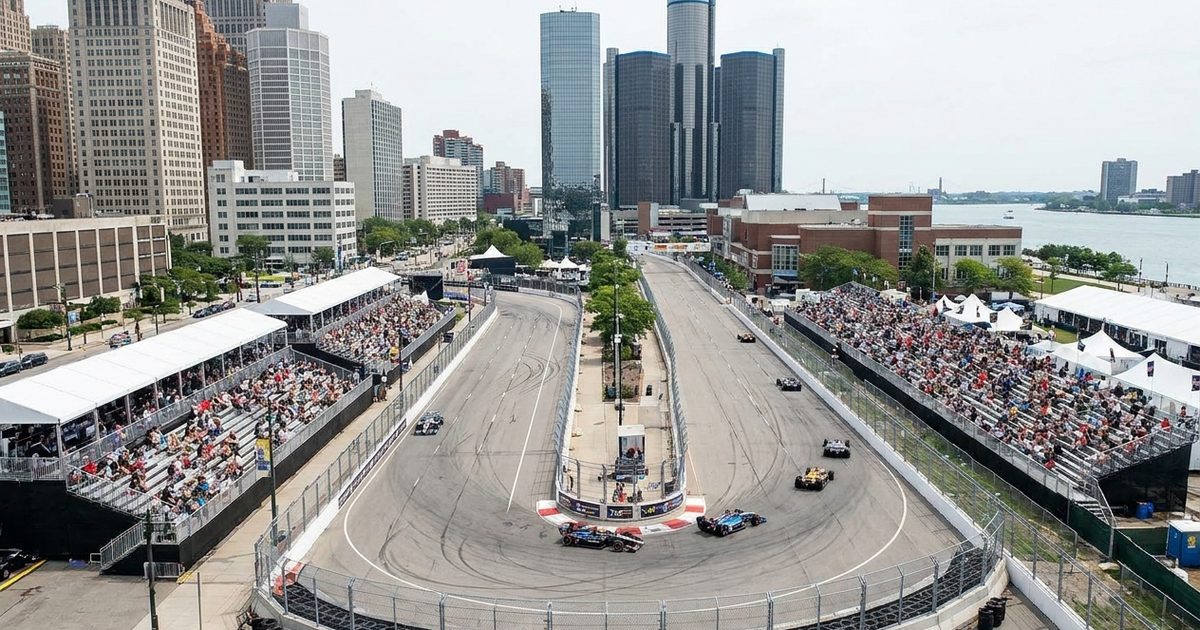
DETROIT — Four full-course yellows for track debris defined the INDY NXT by Firestone Detroit Grand Prix on May 31. On the nine-turn, 1.645-mile downtown street circuit scheduled for 45 laps, race control’s caution flags turned what might have been a clean sprint into a survival exercise.
Enzo Fittipaldi won in the No. 67 HMD Motorsports machine — crossing under caution with a nose cone and front wing destroyed on the opening lap. He drove the full distance with the broken bodywork dragging down every straight.
Lap 1 Sets the Tone
The chaos arrived at the green flag. Lochie Hughes made an aggressive move at the Turn 3 hairpin, punting pole-sitter Alessandro de Tullio into a spin. The chain-reaction caught Fittipaldi, punching a hole in his nose cone and bending the right side of his front wing.
“I was losing quite a lot of time through (Turns) 6 and 7,” Fittipaldi said. “Down the straight, I could feel the air coming through my legs and I said: ‘Man, this is not good.'”
Hughes received a drive-through penalty for avoidable contact, but the debris — and the aerodynamic compromise — were already facts of the race.
The Debris Caution That Changed Everything
By Lap 21, Myles Rowe had sliced 1.6 seconds off Tymek Kucharczyk’s lead in three laps and was within half a second of the front. Then, on Lap 26, per the official IndyCar race report, race control threw the second full-course yellow for debris on the circuit.
The Lap 27 restart scrambled the order. Rowe lunged under Kucharczyk at Turn 3; both ran wide; Fittipaldi split them on the inside and took the lead.
“I knew Myles was going to go for a lunge there, and I just prepared my mid-corner to exit of Turn 3,” Fittipaldi said. “He went on the lunge on Tymek, and I was able to do the crossover and got the lead.”
More Cars Into the Walls
Two more cautions followed. On Lap 34, Niels Koolen put his No. 10 Chip Ganassi Racing car into the barrier at Turn 8 — more carbon shrapnel, another yellow, another reset.
With approximately four minutes, 20 seconds remaining, Max Taylor’s No. 28 Andretti Global entry nosed into the Turn 1 wall and could not be cleared in time. The race ended under caution before a final green lap could be run.
The Street Circuit Factor
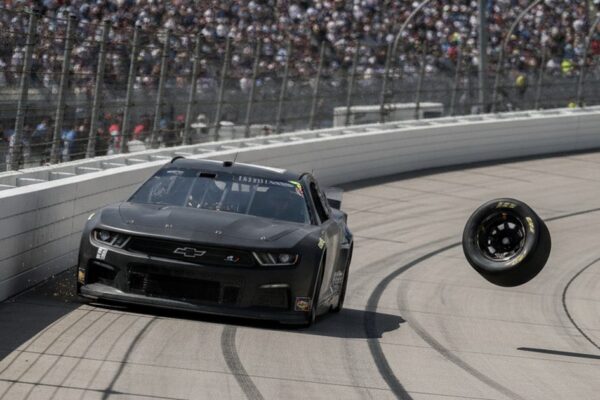
Temporary street circuits amplify debris risk. Concrete barriers sit inches from the racing line with no gravel run-offs to catch loose material. Carbon fiber bodywork — nose cones, wings, barge boards — shatters on impact rather than crumpling, scattering fragments across the racing surface at corner exits.
The weekend flagged the problem early: a loose carbon cover from Josef Newgarden’s car shed onto the circuit during the pre-race warmup and triggered a red flag before racing had even begun.
IMSA Race Also Neutralized by Debris
The same circuit claimed a different race the day before. The IMSA Chevrolet Detroit Sports Car Classic on May 30 appeared decided when Action Express Racing’s Jack Aitken and Earl Bamber built a 14-second lead in the No. 31 Cadillac — then a debris caution with 19 minutes remaining erased that gap.
Per Frontstretch’s race report, the debris yellow was the final caution. Action Express held on through the restart to claim the GTP class win, but the outcome was far from certain.
Track debris reshaping results at street venues is a pattern worth watching. A carbon-fiber debris chain during Indy 500 practice sent fragments across the Indianapolis Motor Speedway infield — as FODNews reported — illustrating how one incident can cascade into multiple red flags and structural damage.
The Result
Fittipaldi’s victory was the first by that family name in Detroit since his grandfather, two-time Indianapolis 500 winner Emerson Fittipaldi, won here in 1991. The race produced an INDY NXT record 141 on-track passes, 124 of them for position. Fittipaldi now leads the series championship by seven points over Nikita Johnson.
The INDY NXT series moves next to the 1.25-mile oval at World Wide Technology Raceway in Madison, Illinois, on June 7 — a banked oval that offers a very different debris profile than downtown Detroit’s concrete streets.
Subscribe to FODNews for continuing coverage of track debris incidents and their impact on motorsport and aviation.