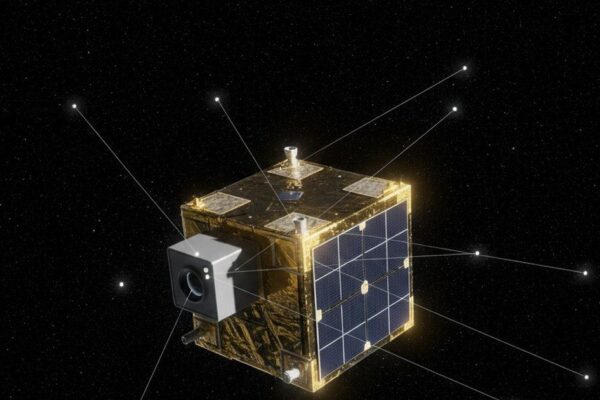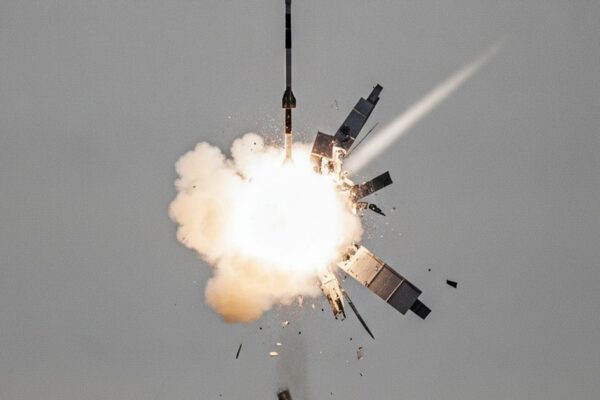

A Chinese Long March 6C rocket upper stage has fragmented in orbit, generating an estimated cloud of tens to hundreds of debris fragments. The breakup came just two days after the stage delivered a seven-satellite rideshare mission. The event, detected by commercial radar tracking, marks the latest in a recurring string of breakups tied to China’s Long March 6-series upper stages.
What LeoLabs Detected
LeoLabs said its Multi-Object Detection tool first flagged numerous objects clustered near the rocket body during a radar pass over its Western Australia site. A follow-up pass over the company’s New Zealand site then confirmed the event, according to SpaceNews.
The fragmentation occurred at 2:30 a.m. UTC on Aug. 27, 2026, LeoLabs said in a post on the social platform X. The affected object is catalogued as NORAD ID 100472, international designation 2026-195H.
“We estimate tens to hundreds of fragments were generated,” the company said.
Launch and Orbital Details
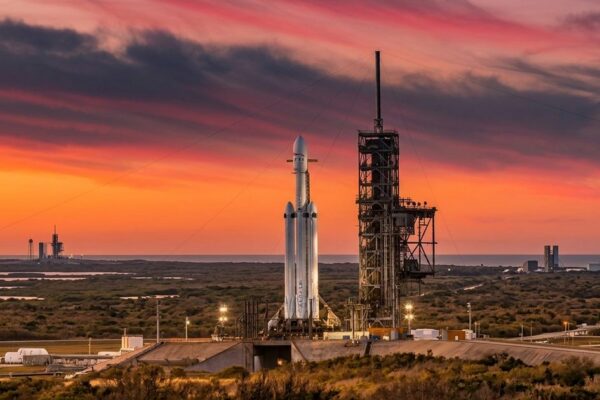
The Long March 6C lifted off Aug. 25 (0321 UTC) from the Taiyuan Satellite Launch Center in northern China, carrying seven satellites as part of a rideshare mission. The two-stage, kerosene-fueled rocket was built by the Shanghai Academy of Spaceflight Technology, a subsidiary of state-owned contractor CASC.
The stage’s orbit measured roughly 396 km at perigee and 482 km at apogee, according to LeoLabs. That altitude range overlaps with operational shells used for crewed spaceflight and large satellite constellations, including Starlink. As a result, the debris raises near-term collision risks, though it is expected to reenter within a few years given the relatively low altitude.
A Recurring Long March 6 Pattern
This is not an isolated incident. The Long March 6C shares a key design lineage with the Long March 6A, which uses a slightly larger second stage but the same single YF-115 kerosene-liquid oxygen engine. That shared architecture has now produced a string of breakups.
The first documented case came in November 2022, when the U.S. 18th Space Defense Squadron identified and catalogued 533 fragments from a Long March 6A stage by the end of January 2023. Another Long March 6A stage broke apart into more than 700 pieces of debris in August 2024. Additional stages have released debris without fully fragmenting, SpaceNews reported.
FODNews covered the most recent prior case in July, when a Long March 6A upper stage broke apart, scattering more than 300 trackable fragments in low Earth orbit. The Aug. 27 Long March 6C event extends that pattern to a second vehicle in the same rocket family. That suggests the underlying issue may not be confined to a single stage design.
Some Breakups Persist for Decades
Not all of these events pose the same reentry timeline. Some Long March 6A fragmentations have occurred at significantly higher altitudes than the Aug. 27 event. As a result, that debris could remain in orbit for decades before naturally deorbiting, according to SpaceNews reporting on the series of incidents.
Standards Versus Practice
China drafted national standards for launch vehicle orbital stage disposal in 2023, intended for implementation starting in January 2024. Those guidelines call for deorbiting spent stages where feasible, limiting how long stages remain in orbit, passivating stages to prevent explosions, and avoiding debris-generating collisions.
Despite the standards, neither the Shanghai Academy of Spaceflight Technology, CASC, nor the China National Space Administration has offered a public technical explanation for any of the four prior Long March 6A breakups, according to SpaceNews. When asked about the August 2024 breakup, Chinese Foreign Ministry spokesperson Lin Jian said the mission was “a peaceful use of outer space consistent with international law and universal practice” and that China had “taken necessary measures” to monitor the debris, without addressing the cause of the fragmentation.
Separately, commercial space-imaging firm HEO Robotics has used its Continuum-1 satellite to photograph an intact Long March 6A stage in orbit. That baseline image could help investigators determine what changes precede a breakup, the company said in a social media post cited by SpaceNews.
Context: A Growing Debris Problem
The Long March 6C event lands against a backdrop of accelerating orbital congestion. The European Space Agency’s Space Debris Office estimates there have been more than 660 breakups, explosions, collisions, or other anomalous fragmentation events across the history of spaceflight.
The office tracks roughly 54,000 objects larger than 10 centimeters currently in orbit, of which about 9,300 are active payloads — meaning the remainder is debris. Below that size threshold, the numbers escalate sharply: an estimated 1.2 million objects between 1 and 10 centimeters, and around 140 million between 1 millimeter and 1 centimeter, are believed to be in orbit. Objects at the smaller end are too small to catalog individually, but they can still disable a spacecraft on impact due to orbital velocities.
As launch rates climb globally, driven in part by both SpaceX and Chinese providers, incidents like the Long March 6C fragmentation add pressure on regulators and satellite operators. They now must track and mitigate risk in an increasingly crowded low Earth orbit environment.
Sources
- SpaceNews: Long March 6C rocket stage fragments in orbit, creating cloud of debris
- FODNews: Chinese Long March 6A Upper Stage Breaks Apart in LEO, Scattering 300+ Trackable Debris Fragments
- ESA Space Debris Office: Space debris by the numbers
Want more coverage like this? Subscribe to FODNews for ongoing tracking of orbital debris events and FOD incidents worldwide.