NASA’s Van Allen Probe A Falls to Earth a Decade Early After Solar Activity Accelerates Decay
PASADENA, Calif. — March 12, 2026 — NASA’s Van Allen Probe A fell back to Earth Wednesday morning — nearly a decade ahead of schedule. The Van Allen Probe A reentry is the latest sign that intensifying solar weather is scrambling predictions for satellites and debris in low Earth orbit.
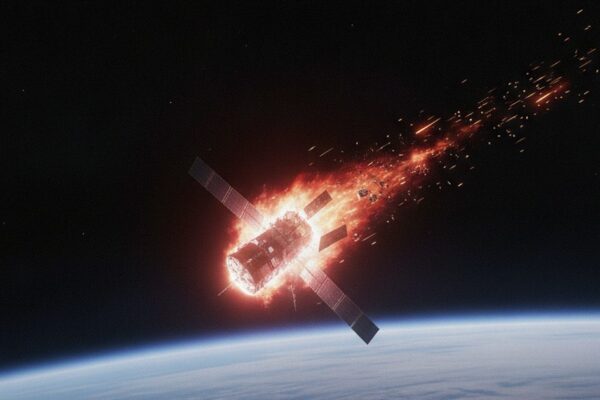
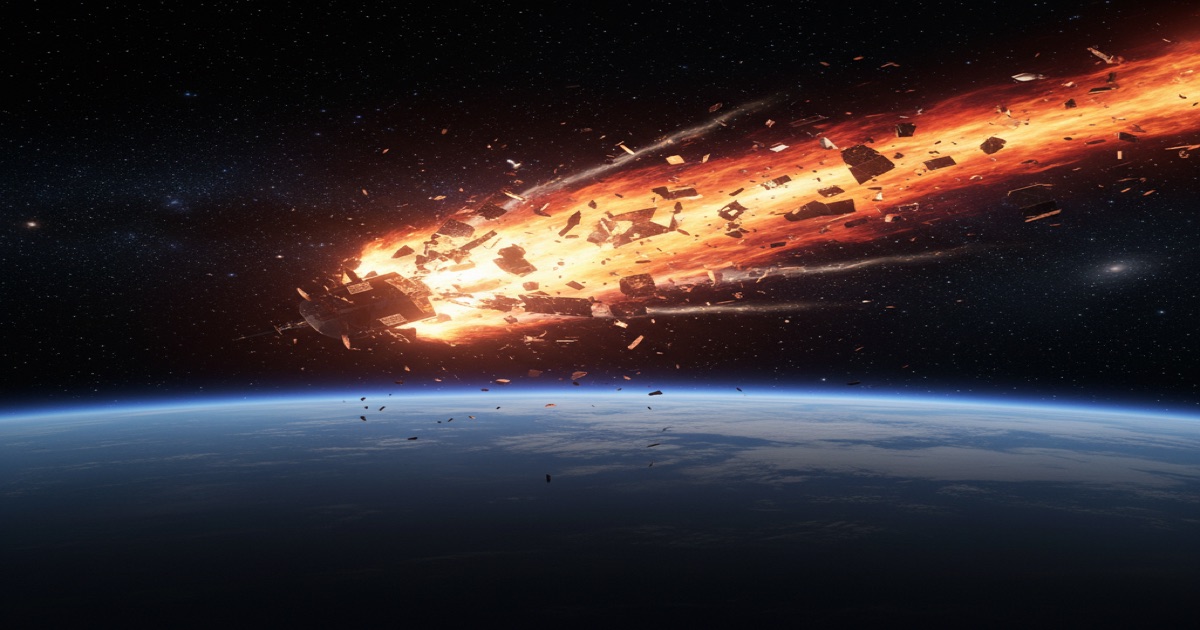
The spacecraft burned through the atmosphere at 6:37 a.m. EDT on March 11, 2026, the U.S. Space Force confirmed. The probe came down over the eastern Pacific Ocean at approximately 2 degrees south latitude, 255.3 degrees east longitude. NASA expected most of the 600-kilogram (1,323-pound) spacecraft to incinerate on descent. Officials acknowledged, however, that some components may have survived reentry.
No confirmed impacts or injuries have been reported.
A Mission That Outran Its Timeline — Then Ran Out of Time
Van Allen Probe A launched in August 2012 alongside its twin, Van Allen Probe B. Their mission: study the radiation belts surrounding Earth. Originally designed for a two-year mission, both spacecraft continued operating for nearly seven years before running out of fuel. NASA shut down Probe A in October 2019 and Probe B in July 2019.
NASA then left both spacecraft in their highly elliptical orbits to decay naturally. Those orbits swung as far as 18,900 miles (30,415 km) from Earth and as close as 384 miles (618 km). NASA’s mission team initially projected both probes would remain in orbit until 2034.
The sun had other ideas.
Solar Weather Accelerated the Van Allen Probe A Reentry
The ongoing solar maximum is an unusually active phase of the roughly 11-year solar cycle. It has expanded Earth’s upper atmosphere significantly. A denser atmosphere increases aerodynamic drag on orbiting objects. At altitudes where that drag is nearly imperceptible under calm solar conditions, the effect accumulates over time.
For Van Allen Probe A, that cumulative drag erased nearly eight years from its predicted lifespan. NASA expected it to orbit until 2034. Instead, it came down in March 2026.
The effect on its twin is smaller but real. Scientists no longer expect Van Allen Probe B to reenter until after 2030. Its timeline has shortened, but not as dramatically. The difference likely reflects orbital geometry at the time solar activity intensified.
Debris Risk Was Low — But Not Zero
Officials assessed a 1-in-4,200 chance that surviving debris would strike someone on the ground. That figure — roughly 0.02% — reflects the fact that water covers approximately 70 percent of Earth’s surface. An open-ocean splashdown was therefore the most probable outcome for any components that survived the descent.
The eastern Pacific reentry location was consistent with that expectation.
Still, the uncontrolled reentry illustrates the limits of passive decay as a deorbit strategy. NASA had no ability to target a splashdown zone, adjust trajectory, or issue real-time warnings. Moreover, solar activity had compressed the projected timeline by nearly a decade.
The Broader Challenge: Reentry Timing Is Getting Harder to Predict
Space debris managers rely on atmospheric drag models to forecast when and where deorbiting objects will reenter. Those models depend on solar activity forecasts — and the current solar cycle has repeatedly exceeded predictions.
Van Allen Probe A is not an isolated case, as FODNews coverage throughout this solar cycle has documented. Satellite operators across LEO have reported unexpected orbit decay rates as the sun’s output has surged. Objects that should have remained in orbit for years are coming down sooner. Objects expected to deorbit on their own are doing so faster — sometimes before operators intended.
The inverse problem also exists. During solar minimum, drag decreases and debris lingers longer than modeled. Both effects compound the already-difficult task of maintaining accurate orbital catalogs and predicting reentry corridors.
A Scientific Legacy That Outlasts the Spacecraft
Despite its early return, Van Allen Probe A leaves behind a substantial scientific record. The Johns Hopkins University Applied Physics Laboratory (APL) managed and operated both probes. Together, the twin-spacecraft mission produced more than 700 peer-reviewed studies.
Among its key findings: the Van Allen radiation belts behave far more dynamically than previously understood. Furthermore, a temporary third radiation belt can form during periods of intense solar activity.
Researchers gathered that data during seven years of operations through one of the most hazardous radiation environments near Earth. It continues to inform critical models used to protect satellites, predict space weather impacts on power grids, and plan future crewed missions.
Van Allen Probe B remains in orbit. NASA has not revised its post-2030 reentry estimate. That projection will be updated as solar activity continues to evolve.
Subscribe to FODNews for ongoing coverage of space debris, orbital safety, and reentry events.
Sources
- NASA — Van Allen Probe A to Re-Enter Atmosphere (official statement)
- Space.com — Incoming! 1,300-pound NASA satellite crashes back to Earth over eastern Pacific Ocean
- Discover Magazine — Intense Space Weather Forces NASA’s Van Allen Probe Back to Earth Nearly a Decade Early
- SatNews — A Satellite Crashes Home a Bit Too Soon