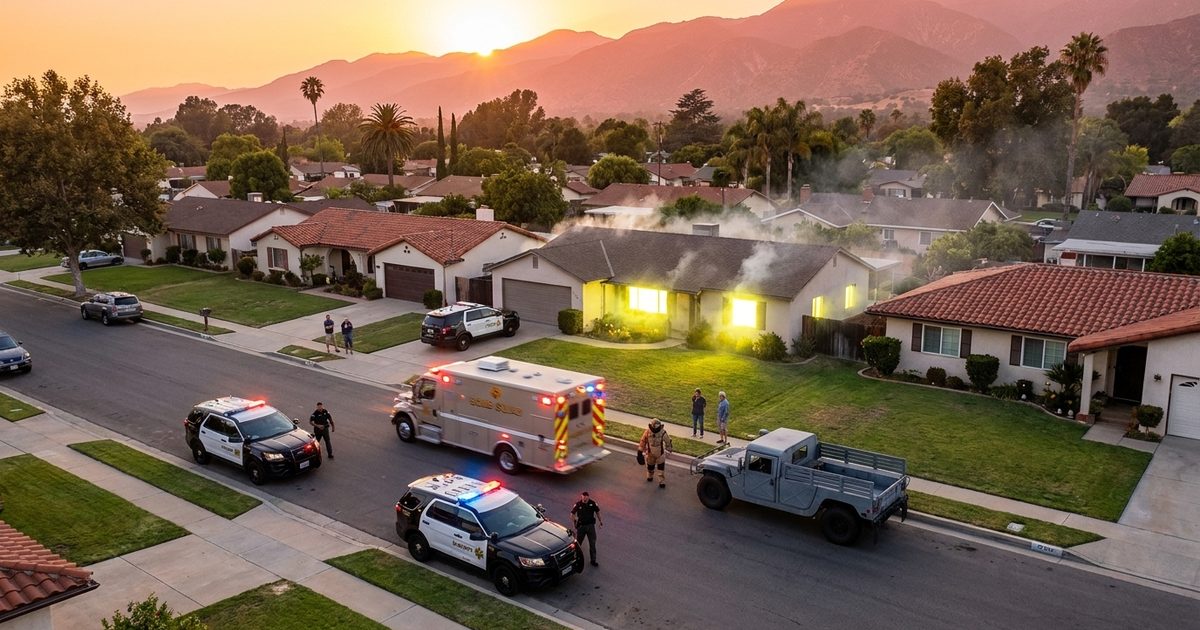
A Navy MK25 marine marker washed up on a Ventura County beach last week. A beachgoer carried the phosphorus-filled device home to Ojai before authorities could respond, the Ventura County Sheriff’s Bomb Squad said.
The Ventura County Sheriff’s Office Bomb Squad and a U.S. Navy explosive ordnance disposal team responded to the Ojai residence to secure the marker. The Navy EOD team came from Naval Base Ventura County‘s Point Mugu installation, according to a social media post from the sheriff’s office. Officials did not identify the exact beach where the device was found or say how long it had been in the water.
The resident, who was not publicly identified, told authorities they spotted the object at the waterline. Fearing it could endanger other beachgoers, the resident removed it from the sand and took it home before calling law enforcement. Officials said the intent was good, but the decision was risky.
“Although well intentioned, marine markers, even if wet and expended, are extremely dangerous,” the Ventura County Sheriff’s Bomb Squad said in its post. “Residual phosphorus can dry out once removed from the water, then spontaneously reignite or explode when moved.”
What Is a Navy MK25 Marine Marker?
The MK25 is a military pyrotechnic device that marks a location on the ocean surface with visible smoke and flame. It gives aircraft and vessels a reference point during search-and-rescue and anti-submarine warfare operations. Crews can drop it from aircraft or deploy it manually. The device relies on a red phosphorus compound that officials say can burn at temperatures up to 3,000 degrees Fahrenheit and release toxic byproducts.
Bomb squad officials said markers that appear spent or waterlogged should never be handled, moved or stored. Instead, anyone who finds a suspected military device on a beach should leave it in place, keep others away and call 911.
Meanwhile, the Orange County Sheriff’s Department Bomb Squad responded to the post. It noted that its own crews have handled several similar devices washing ashore in recent weeks. Officials in both counties linked the discoveries to an active El Niño weather pattern. The pattern has driven powerful swells and storm surf along the Southern California coast this season, churning up sand and decades-old hardware along with it.
This is not the first time that changing ocean conditions have delivered unexpected — and unexploded — military debris to civilian beaches. FODNews has separately tracked how foreign-object hazards from military and aerospace activity can reach the public with little warning. That coverage has included rocket debris drop-zone warnings in the Philippines tied to nearby launch activity.
Southern California beaches near current and former military installations have periodically produced similar finds, from training ordnance to flares. As a result, shifting sand and stronger wave action can expose material that had settled near the seafloor. Safety officials say the public should treat any unfamiliar metal canister, tube or cylinder found on a beach as a potential hazard, not a souvenir.
Subscribe to FODNews for continuing coverage of FOD incidents and prevention worldwide.
Sources
- Los Angeles Times — “‘Bomb-like’ marine marker among unusual items that El Niño has washed onto California’s shores” (Mon. Sept. 28, 2026)
- KTLA — “‘Concerned citizen’ finds dangerous Navy device on Southern California beach” (Mon. Sept. 28, 2026)
- New York Post — “Navy military device washed up on California beach and taken to home” (Mon. Sept. 28, 2026)