Pilots Speak Out: Bird Strikes Near Major Airports Are Getting Worse — and Costing $900M a Year
A new Aviation A2Z report compiles pilot testimony and safety data revealing a growing disconnect between official reporting and frontline experience. The numbers tell a sobering story.
The Scale of the Problem
Bird strikes near major airports are not a rarity. They are, by most measures, a routine feature of commercial aviation — one that the industry has never fully solved.
According to the FAA’s National Wildlife Strike Database, U.S. civil aircraft logged 22,372 wildlife strikes in 2024 — a 14% jump from the 19,628 recorded in 2023. That total ranks among the highest since tracking began in 1990, spanning 809 airports nationwide.
The financial toll is significant. Bird strikes cost U.S. aviation an estimated $900 million annually, encompassing engine repairs, airframe damage, diversions, inspections, and flight delays. Globally, the numbers compound rapidly: more than 270,000 bird strikes were reported in the five-year window between 2016 and 2021, according to data compiled by Pilots Who Ask Why.
FODNews has previously reported on the surge in wildlife strikes at general aviation airports and the widening gap between reported incidents and actual encounters.
What Pilots Are Saying
The official statistics, substantial as they are, may not capture the full picture. A report published April 12, 2026, by Aviation A2Z compiled pilot accounts from major carriers. The consensus is blunt: bird encounters are far more common than passengers — or even some safety databases — reflect.
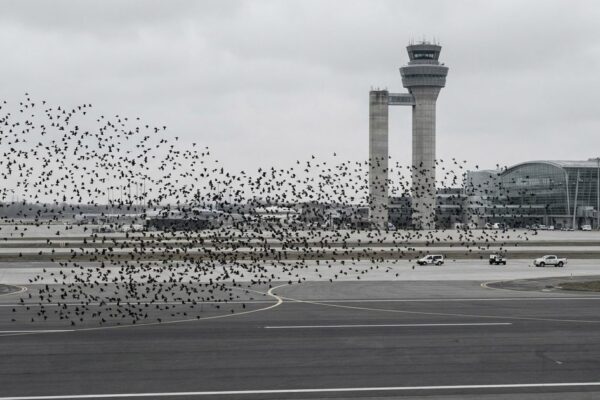
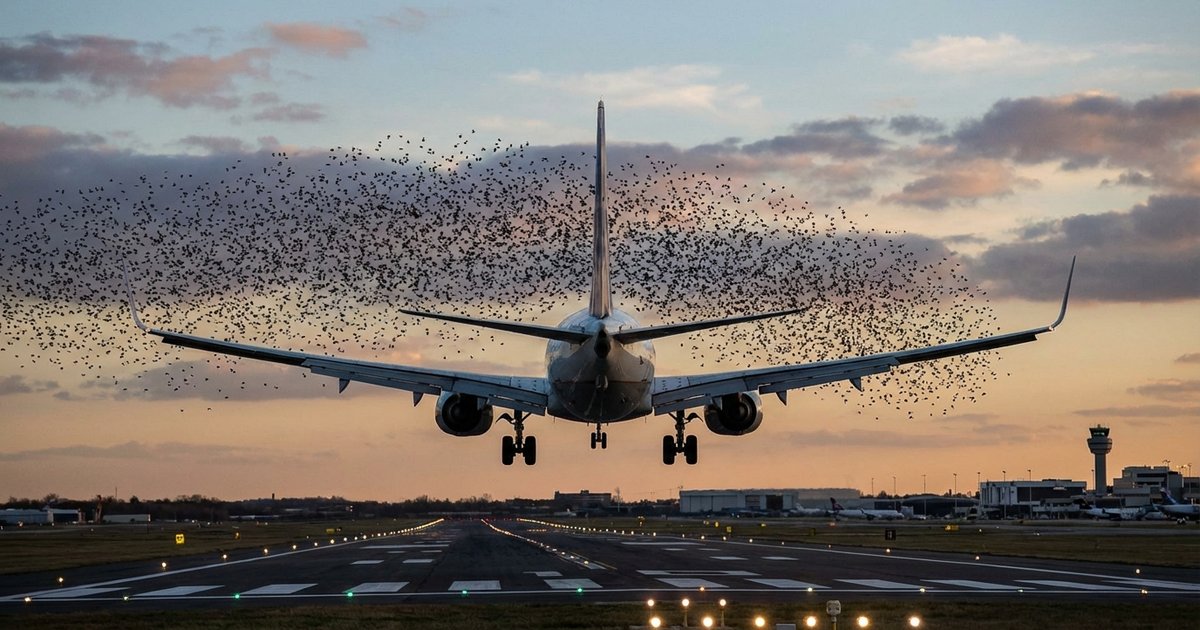
Pilots describe frequent close calls during approach and departure, when aircraft operate at altitudes where bird activity is most concentrated. Many incidents go unreported, particularly when no damage is detected and the flight continues without disruption.
“Avoiding birds entirely is not always possible,” one pilot account noted. “You make adjustments when you can, but at low altitude on short final, your options are limited.”
The FAA’s own data supports this pattern: 74% of strike reports come from pilots, suggesting airport-side reporting lags behind what crews experience in the air. Between 2% and 8% of recorded strikes result in aircraft damage; between 6% and 7% produce a negative operational effect on the flight itself.
Since the start of commercial aviation, bird strikes have caused an estimated 618 hull losses and 534 fatalities worldwide. That figure comes from European Union Aviation Safety Agency data analyzed by Pilots Who Ask Why. Those numbers accumulate quietly — crash by crash, engine failure by engine failure — across more than a century of flight.
Major Airports at Greatest Bird Strike Risk
Not all airports face equal exposure. Pilots in the Aviation A2Z report specifically flagged coastal airports and urban corridors as the most dangerous emerging environments.
Coastal locations concentrate bird activity by design. Shorelines, wetlands, and estuaries attract large populations of gulls, waterfowl, and wading birds — many of which feed, roost, and migrate along paths that intersect directly with approach and departure corridors. New York’s LaGuardia Airport (LGA) is frequently cited as a high-exposure example, given its position within the same migratory corridors that proved catastrophic in January 2009.
US Airways Flight 1549 lost both engines to a flock of Canada geese shortly after departure from LGA and successfully ditched in the Hudson River. It remains the most-cited example of how quickly a bird strike can escalate into a life-or-death emergency. All 155 aboard survived — but the encounter left an indelible mark on how the industry thinks about bird hazard near major urban airports.
Urban green corridors present a newer challenge. As cities have expanded green infrastructure — parks, restored wetlands, urban tree canopy — bird populations have followed. What were once clear buffer zones around airports have, in some regions, become ecological corridors funneling wildlife directly toward runways. The FAA’s updated Advisory Circular AC 150/5200-32C, revised in July 2024, underscores the growing complexity of wildlife hazard management as urban landscapes evolve around airports.
FODNews has documented similar pressures at Denver International Airport, where wildlife management teams face competing demands from the surrounding prairie ecosystem.
The Reporting Gap
One of the most consistent themes in pilot testimony is the underreporting of bird strikes — and the structural reasons behind it.
When a strike produces no visible damage and the flight continues without incident, many crews choose not to file a report. The paperwork burden is real; the perceived upside is low. Some pilots note pressure — implicit or otherwise — to preserve on-time performance metrics rather than trigger an inspection that grounds the aircraft for hours.
The FAA’s database already shows more than 319,000 strikes recorded since 1990, with 82 U.S. fatalities and 126 aircraft destroyed over that period. But researchers and pilots alike suggest those totals represent only a fraction of actual encounters. One industry estimate holds that only about 20% of strikes are formally reported.
The seasonal pattern in reported data offers a partial window into real-world exposure. The FAA found that 54% of bird strikes occur between July and October — peak migration season for hundreds of North American species. The fall migration alone moves billions of birds across the continent, many of them at night, contradicting the common misconception that birds are inactive after dark. According to data reviewed by Pilots Who Ask Why, 19% of all bird strikes happen at night. Nocturnal strikes above 500 feet AGL occur at roughly seven times the rate of daytime strikes during spring and fall migration.
The mix of species adds complexity. The FAA identified 410 bird species in 2024 strike records, with 60% identified to species level. Canada geese, European starlings, and large gulls top the hazard rankings, but even smaller species can cause significant damage when ingested by turbofan engines at high velocity.
Technology Solutions — and Their Limits
The most promising mitigation technology currently available is avian radar — systems that track bird movements in real time and alert wildlife management teams before aircraft encounter a flock.
The results at airports that have deployed it are striking. Aalborg Airport in Denmark achieved a 75% reduction in bird strikes in 2018 after installing avian radar, combining it with ground patrols, remote-controlled gas cannons, structured hunts, and a digital wildlife registration system. The radar gave wildlife control units the ability to respond to incoming bird activity in real time rather than reacting after the fact.
Future deployments aim for an even more proactive approach. Networked systems would share radar-derived bird risk forecasts directly with airlines and pilots — giving crews the same advance warning for bird activity that weather systems provide for turbulence.
But avian radar remains far from universal. Cost, regulatory complexity, and a lack of standardized deployment requirements have kept the technology concentrated at a handful of larger airports. The vast majority of the 809 U.S. airports that recorded wildlife strikes in 2024 rely on conventional deterrents — trained birds of prey, pyrotechnics, habitat modification, and vehicle patrols — methods whose effectiveness varies considerably by airport layout and species composition.
The FAA’s wildlife hazard mitigation framework sets standards for airport wildlife management plans but does not mandate specific technologies — a gap FODNews examined in its wildlife strike mitigation playbook analysis. Critics argue that this leaves the most effective tools optional at precisely the airports — smaller general aviation fields, regional hubs — where resources and expertise are thinnest.
A Pattern of Escalation
The trajectory is difficult to dispute. Bird strike totals have climbed in the FAA database for decades. Contributing factors include growing bird populations, rising air traffic, and the increasing sensitivity of modern turbofan engines — which are quieter and thus provide less acoustic warning to birds than older designs.
Commercial transport aircraft account for 85% of reported U.S. strikes, reflecting both the volume of scheduled airline operations and more consistent reporting discipline among airline crews. But recent FAA data shows damaging strike rates rising fastest at general aviation airports — fields that often lack full-time wildlife management programs.
International incidents have reinforced the stakes. Earlier this year, an AirAsia flight sustained engine damage following a bird strike at Chennai. A Canada goose strike damaged an Alaska Air Cargo A330 at Cincinnati. Across Asia, the Lion Group reported a surge in bird strikes in Indonesia tied to seasonal migration patterns during the Lebaran holiday travel peak. India’s DGCA has opened inquiries following incidents involving dual-engine bird ingestion.
None of these are isolated events. They are data points in a pattern that pilots — the people closest to the hazard — have been describing for years.
What Comes Next
The conversation around bird strikes has shifted in recent years from reactive to proactive — at least in principle. Wildlife management programs have grown more sophisticated. Radar technology has demonstrated what’s possible. Data collection has improved.
But pilots who fly approach corridors into coastal airports — navigating migratory flyways and managing in-flight strikes without disrupting passengers — report a stubborn reality. The gap between what the industry knows and what it does about it remains wide.
The $900 million annual price tag is significant. The 22,372 reported strikes in 2024 — with the understanding that actual encounters likely number far higher — is significant. The 534 fatalities attributed to bird strikes since aviation’s earliest days is significant.
Those numbers may yet accelerate the deployment of proven mitigation technologies at airports that still lack them. Whether that happens soon enough is a question the industry, regulators, and the traveling public will increasingly have to answer together.
Subscribe to FODNews for independent coverage of FOD incidents, wildlife hazards, and airside safety worldwide.
- Aviation A2Z — “Pilots Reveal the Shocking Reality of Bird Strikes Near Major Airports” (April 12, 2026)
- FAA National Wildlife Strike Database — Wildlife Strike Report 1990–2024 (published June 2025)
- FAA Advisory Circular AC 150/5200-32C — Reporting Wildlife Strikes (updated July 31, 2024)
- Pilots Who Ask Why — “The Threats of Bird Strikes and How to Mitigate Them” (May 2024)
- Innovation News Network — “Bird Strike Prevention: Reducing Collisions Between Birds and Aircraft”
- EASA — Rotorcraft Bird Strike Data and Hazard Rankings (via Pilots Who Ask Why)