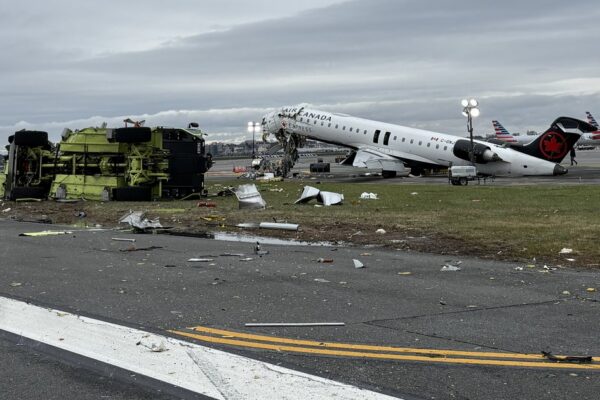
WASHINGTON, D.C. — March 5, 2026 — Wildlife strikes against U.S. civil aircraft jumped 14 percent in 2024, reaching 22,372 reported incidents — roughly 61 every single day — according to the FAA’s National Wildlife Strike Database. The surge outpaced growth in air traffic and, more troublingly, is hitting general aviation airports hardest.
The Numbers Behind the Trend
The FAA’s annual wildlife strike report tells a story that’s been building for decades. Strikes climbed from 19,628 in 2023 to 22,372 in 2024 — a jump that far exceeds the 4 percent growth in aircraft movements at Part 139-certificated airports and the 3 percent increase at general aviation airports during the same period. This isn’t just more traffic producing more strikes. The strike rate itself is rising.
The FAA attributes the trend to two converging forces: expanding bird populations and quieter aircraft engines. Since 1990, 36 key bird species have posted a net population gain of approximately 35 million individuals in North America. At the same time, advances in engine technology have made aircraft harder for wildlife to detect and avoid. The result is an aviation environment where wildlife hazards are structurally worsening, not just fluctuating.
The economic toll is significant. FAA projections for 2024 estimate $473 million in direct and indirect monetary losses to U.S. civil aviation from wildlife strikes, along with 74,268 hours of aircraft downtime. Since 1990, strikes have damaged or destroyed 88 civil aircraft in the U.S. and contributed to 82 fatalities. The threat is not abstract: in January 2026, an Alaska Air Cargo A330 struck eight Canada geese at Cincinnati CVG, lost an engine, and made an emergency landing with smoke in the cockpit.
GA Airports Bearing a Disproportionate Burden
The headline number — 22,372 strikes — tends to get dominated by commercial aviation. Commercial transport aircraft accounted for 85 percent of reported strikes in 2024; general aviation aircraft accounted for 15 percent. But the aggregate share masks a more alarming pattern when you look at where damage is occurring and at what rate.
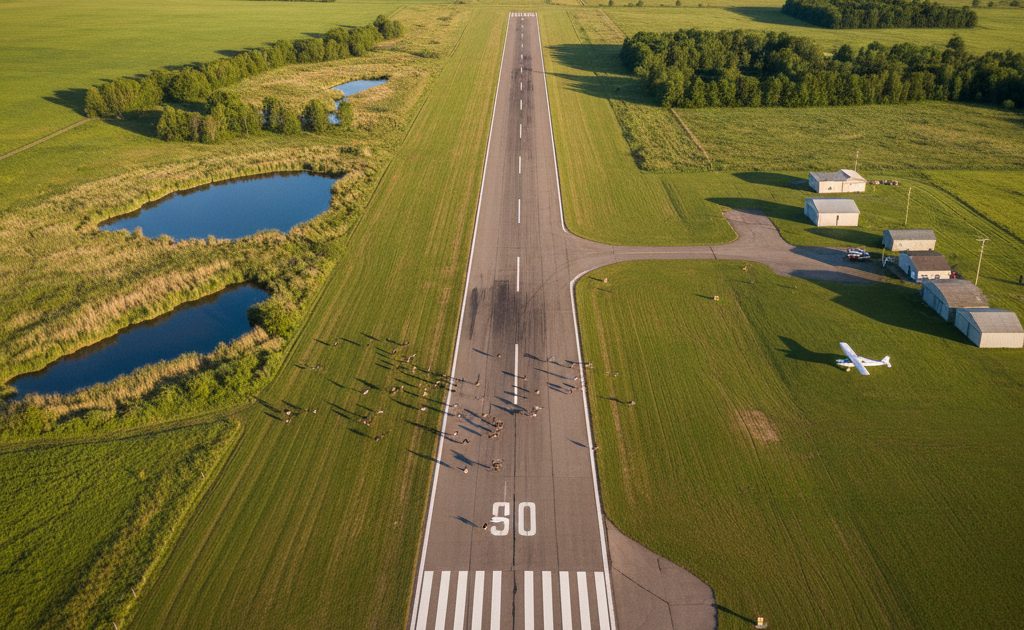
Of the 809 airports reporting strikes in 2024, 376 were general aviation airports — nearly half. More critically, the FAA’s own data shows that damaging strike rates have risen significantly at general aviation airports since 2000, even while rates at Part 139-certificated airports have held relatively stable. Since 1990, 58 percent of all U.S. civil aircraft destroyed by wildlife strikes occurred at general aviation airports.
Why? The short answer is resources — or the lack of them. Commercial airports are required under 14 CFR Part 139.337 to develop Wildlife Hazard Management Plans (WHMPs) following qualifying incidents. They have the staffing, the funding streams, and the regulatory obligation to manage hazards systematically. Most general aviation airports operate without that framework in place and without the budget to build one.
Of the 88 U.S. civil aircraft destroyed by wildlife strikes from 1990 to 2024, 58 percent were at general aviation airports. The pattern is not random — it reflects a structural gap in hazard management capacity at smaller facilities.
Mitigation Funding: A Widening Gap
Federal support for wildlife hazard mitigation does exist, but it’s fragmented and insufficient relative to need. The FAA’s Airport Improvement Program (AIP) provides grants covering Wildlife Hazard Assessments and WHMP development. GA airports accepting federal funds are required to conduct assessments following qualifying strike events. Since 2009 — following the “Miracle on the Hudson” and the national attention it brought to bird strike risks — the FAA has channeled more than $400 million into airport safety projects and $30 million into detection technologies such as avian radar systems.
But the USDA Wildlife Services program, which provides direct technical assistance and hazard management at airports, operates without a dedicated baseline appropriation from Congress. The agency currently assists at approximately 807 airports using about 340 staff-years of effort. That assistance depends on interagency agreements and direct reimbursement from airports — a model that works reasonably well for large commercial facilities and breaks down for smaller GA airports operating on thin margins.
The consequence is a tiered system where mitigation quality correlates closely with airport size and revenue. A regional commercial airport can budget for a wildlife biologist contract, annual habitat assessments, and integrated population control programs. A small GA airport often cannot. And as the 2024 data confirms, the hazard environment at those smaller airports is getting worse, not better.
What Needs to Change
The FAA’s report notes that wildlife management beyond airport perimeters is increasingly critical — and increasingly overlooked. Agricultural land, wetlands, and urban development adjacent to airport property create wildlife attractants that no amount of on-airport habitat modification can fully offset. Effective mitigation requires coordination with land managers, municipalities, and wildlife agencies well beyond the fence line. That kind of coordinated program is expensive, and it requires sustained funding that most GA airports simply don’t have access to.
The other gap is reporting. The FAA estimates that only around 74 percent of 2024 strikes used standard FAA reporting channels. Underreporting is especially prevalent at general aviation airports, where informal operations and limited staff make systematic documentation rare. Without accurate strike data, risk assessments are incomplete — and the true scope of the problem is likely larger than the numbers show.
The 14 percent year-over-year increase is significant. But the more important number may be the decades-long accumulation of destroyed aircraft, injuries, and economic losses concentrated at facilities that have the fewest tools to fight back. Addressing that imbalance — through dedicated funding for USDA Wildlife Services, expanded AIP eligibility for smaller airports, and better strike reporting infrastructure — would do more to bend the trend line than any amount of avian radar at commercial hubs.
The data is clear. The policy response, so far, has not matched it.
Sources
- FAA Wildlife Strike Database — wildlife.faa.gov
- General Aviation News — “Wildlife strikes surge as GA airports bear the brunt”
- FAA Advisory Circular 150/5200-33C — Hazardous Wildlife Attractants On or Near Airports
- USDA Wildlife Services — Airport Wildlife Hazard Management
- 14 CFR Part 139.337 — Wildlife Hazard Management (eCFR)