Sacramento Airport Logs 161st Wildlife Strike of 2025 After Horizon Air E175 Incident
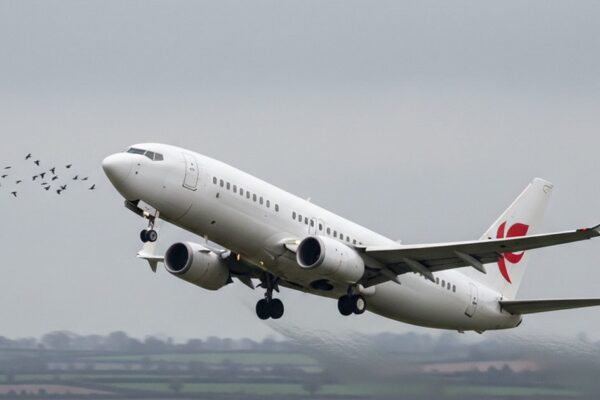
A Horizon Air Embraer E175 returned to Sacramento International Airport on December 23 after a wildlife strike shortly after takeoff, declaring an emergency as a precaution before landing safely. No injuries were reported, and Alaska Airlines — Horizon’s parent carrier — confirmed no engine components detached during the incident.
The aircraft, registration N638QX, had departed Sacramento on Flight 2026 bound for Seattle when the crew reported the strike. A maintenance team inspected the jet after landing.
Unremarkable in its outcome, the incident was notable in one statistical respect: it was Sacramento International’s 161st wildlife strike recorded in 2025.
A Mid-Size Airport’s Year in Wildlife Strikes
One hundred sixty-one strikes in a calendar year — roughly one every 2.3 days — is not a crisis at Sacramento. It is closer to a baseline.
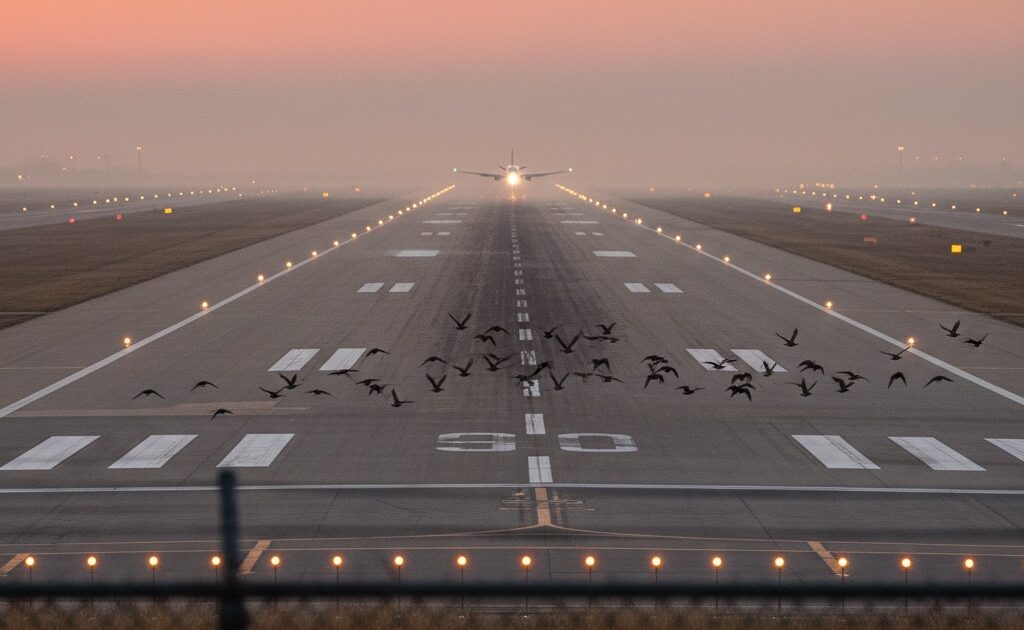
The airport sits beneath the Pacific Flyway, one of North America’s four major migratory bird corridors. It is also flanked by the Natomas Basin, an expanse of farmland and wetlands that supports dense bird populations year-round. The geography is essentially a funnel that channels wildlife directly through the airport’s airspace.
Historical data underscores how persistent the problem is. Sacramento logged 186 wildlife strikes in 2009 and 196 in 2010, according to airport records. The 2025 total of 161 actually represents meaningful progress — down sharply from 245 the prior year — suggesting that active management programs can move the numbers, even if eliminating strikes entirely remains out of reach.
What Prevention Looks Like — and What It Costs
Sacramento spends between $350,000 and $500,000 annually on wildlife hazard management and employs two to three full-time biologists dedicated to the program. The toolkit includes habitat reduction — mowing grass, draining ditches, pruning trees — alongside active hazing: propane cannons, pyrotechnic pistols, and trained bird dogs. When non-lethal measures fail, the airport operates under a federal depredation permit that allows lethal control as a last resort. In 2013-2014, biologists recorded more than 1,300 birds shot on airport grounds under that permit.
That level of investment is not unusual for a commercial airport with a documented wildlife hazard. What is striking is that even with a mature, well-funded program, strikes still number in the hundreds annually.
The National Picture
Sacramento’s situation reflects a broader national trend. According to the FAA’s 2024 Wildlife Strike Report, U.S. airports recorded 22,372 wildlife strikes last year. That represents a 14 percent increase over 2023 — a rate of growth that outpaced the rise in aircraft movements. The FAA projects those strikes cost civil aviation $473 million in direct losses and grounded aircraft for more than 74,000 hours.
Damage rates have actually improved — falling from 18 percent of strikes in 1995 to 4 percent in 2024 — a sign that mitigation programs targeting large, dangerous species are working. But the sheer volume of incidents continues to climb, driven in part by recovering bird populations and quieter aircraft engines that give wildlife less warning of an approaching jet.
Strikes are also concentrated in a narrow window: 54 percent occur between July and October, when migratory movements peak and young birds disperse from nesting sites. For airports like Sacramento, that seasonal surge compounds an already high baseline.
Questions of Scale
The December 23 incident raises a question that safety planners at mid-size airports grapple with regularly: at what point does a high strike count, even without serious outcomes, indicate that current prevention is insufficient?
Most individual wildlife strikes — like the Horizon Air event — end without injury or significant damage. But higher-energy strikes involving large aircraft or large birds can produce far more serious results. The probability of a damaging encounter rises with the frequency of strikes overall.
Wildlife hazard programs at airports in bird-dense corridors face a structural challenge: the habitat that draws wildlife does not stop at the airport fence. As FODNews has reported, general aviation airports often face similar pressures with fewer resources, while major hubs like Denver contend with their own bird management complexities.
For Sacramento, 161 strikes in a year is progress. Whether it is enough progress is a harder question.
Subscribe to FODNews for continuing coverage of wildlife strike incidents and aviation safety worldwide.
Sources
- CBS News Sacramento — Horizon Air Flight 2026 bird strike report
- Aviation Safety Network — Incident record, N638QX
- Simple Flying — Sacramento’s 161st wildlife strike of 2025
- FAA — Wildlife Strikes to Civil Aircraft in the United States, 1990–2024
- Sacramento Bee — Sacramento airport wildlife management program