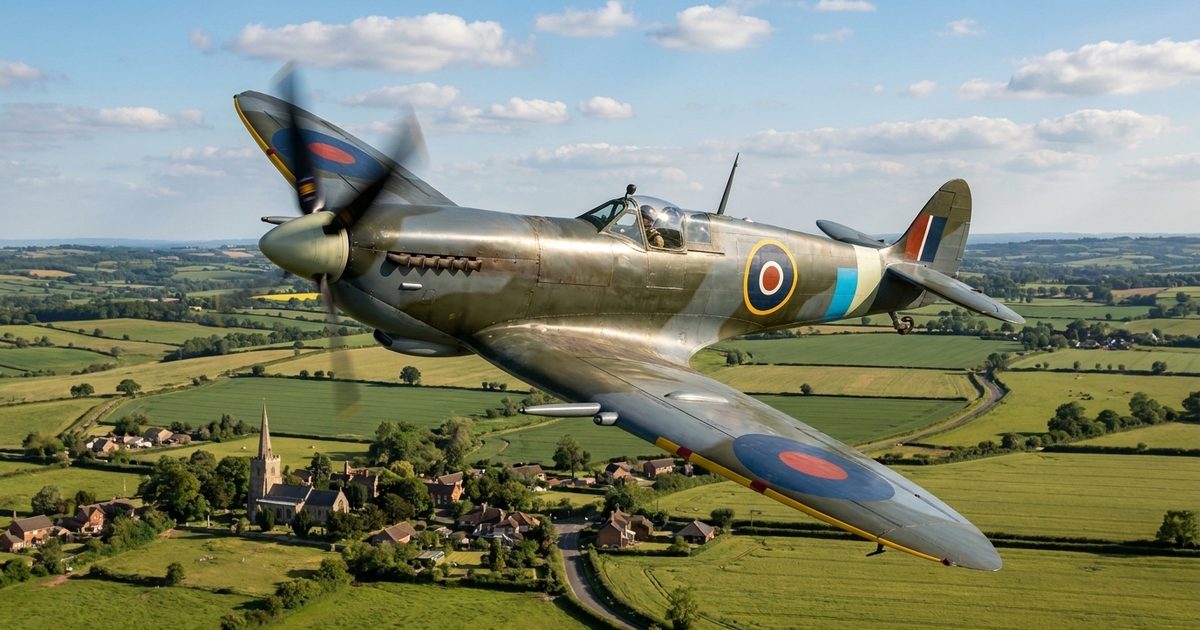
A Spitfire crash inquiry has concluded that debris lodged inside a carburettor for decades was “very likely” the cause of the fatal 2024 crash that killed a Royal Air Force squadron leader at RAF Coningsby.
The Defence Safety Authority (DSA) published its Service Inquiry report into the death of Squadron Leader Mark Long, 43, who was killed on May 25, 2024, when the Battle of Britain Memorial Flight (BBMF) Spitfire MK356 he was flying crashed in a field near the Lincolnshire base just 56 seconds after takeoff. Long was departing RAF Coningsby to conduct a series of flypasts and a display as part of the BBMF’s seasonal schedule.
Spitfire crash inquiry finds decades-old debris choked fuel supply
The Defence Safety Authority, the independent regulator that convenes Service Inquiries into fatal defense accidents, said the panel concluded it was “very likely that debris in the carburettor partially blocked the lean metering jet.” That blockage reduced fuel flow, creating an overly lean mixture that cut engine power and thrust until the Spitfire could no longer sustain flight, according to the published report.
Engine performance data and witness statements were consistent with fuel starvation, the inquiry panel said. Chemical analysis of the debris found inside the carburettor indicated it “had been present for decades” before the accident, predating the crash by years and possibly going back to earlier periods of the historic fighter’s maintenance history. The finding echoes a recurring theme in aviation safety: foreign material left inside aircraft systems can go undetected for long stretches before it causes a failure, as FODNews reported in September after a stray tool was found lodged in an Airbus A330neo tail plane.
Investigators also pointed to confusion within maintenance documentation as a contributing factor. The report found that “multiple, contradictory publications created ambiguity over the correct procedures for carburettor maintenance,” which likely led technicians to interpret inconsistently how extensively the component should have been dismantled, inspected and cleaned, reducing the chance that the debris buildup would ever be detected.
The cockpit layout and pilot restraint system were identified as aggravating factors in the accident’s survivability, the Ministry of Defence-published report found. It acknowledged that structural changes to address this would require significant modifications that could affect both the aircraft’s historic authenticity and its airworthiness through changes to mass and balance.
Report issues 26 safety recommendations for historic aircraft fleet
The inquiry panel issued 26 safety recommendations, including improved maintenance recordkeeping, reviews of cockpit protection measures and enhanced training for in-flight emergencies. The DSA described the recommendations as “robust” and said they “should minimise the likelihood of a recurrence or similar tragedy,” according to the full 158-page report. The findings add to a broader catalogue of Service Inquiry reports the DSA has published covering air accidents and safety incidents across UK defense aviation, available in its public inquiry reports collection.
An inquest opened into Long’s death previously heard that the provisional cause was head and neck injuries sustained in the crash.
Long, who was born in Bury St Edmunds, graduated initial officer training in 2003 and trained on the Tucano before earning his wings. After advanced training on the Hawk and a stint as an instructor, he converted to the Harrier GR7/9 and became the last RAF Harrier pilot qualified to conduct carrier operations. He joined the Typhoon Force in 2012, served as a Typhoon display pilot from 2016, and flew Quick Reaction Alert duties in the UK, the Falkland Islands and during Baltic air policing operations in Lithuania. He was in his fourth season flying with the BBMF when he died.
In a statement issued after his death, Long’s family said: “Mark lived his life with an unwavering passion with laughter, love and dedication to his family. His talent for flying was there for all to see and his ability to connect to everyone he met was infectious. Mark will be cherished and deeply missed by us all.”
Subscribe to FODNews for continuing coverage of FOD incidents and prevention worldwide.
Sources
- Defence Safety Authority/GOV.UK — “Service Inquiry into the death of a service person in an air accident near RAF Coningsby on 25 May 2024” (Oct. 1, 2026)
- BBC News — “Debris in engine very likely caused RAF Coningsby Spitfire crash” (Oct. 4, 2026)
- Forces News — “Decades-old debris in carburettor likely caused fatal Spitfire crash in 2024, report finds” (Oct. 4, 2026)
- MiGFlug — “Spitfire MK356 Crash: Inquiry Blames Carburettor Debris” (Oct. 4, 2026)