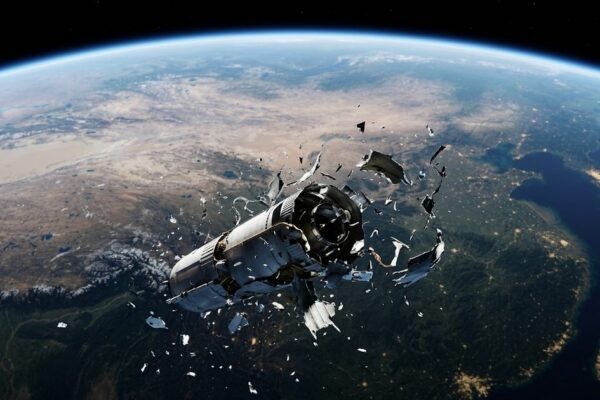
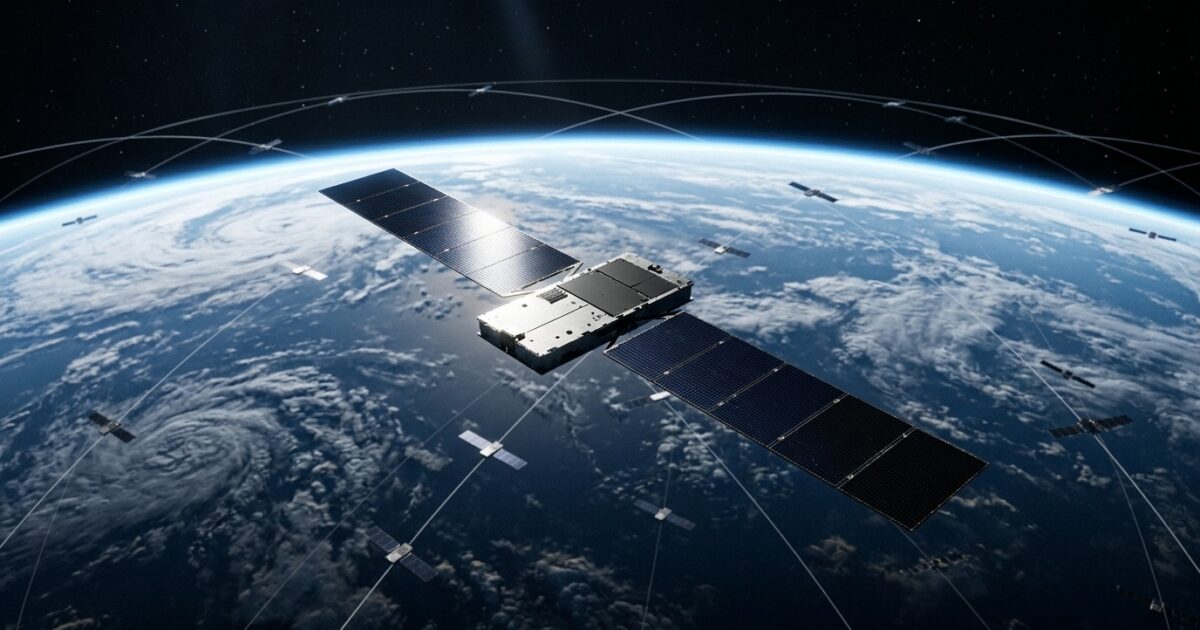
On August 9, 2026, orbital tracking data via Keeptrack.space revealed an unusual Starlink conjunction cluster: five Starlink conjunction events flagged as moderate risk within a single five-day window. The highest-rated encounter was Starlink-36791 approaching a non-operational Electron Kick Stage rocket body — with a maximum collision probability of 23.99% at 16:00 UTC. That event has since passed with no reported collision. Three of the five Aug 9 encounters are now behind us without incident, but two moderate-risk conjunctions remain pending through August 13. Together, the cluster makes the abstract math of LEO’s tightening collision clock strikingly concrete.
What the SOCRATES Data Shows
The five encounters come from SOCRATES (Satellite Orbital Conjunction Reports Assessing Threatening Encounters in Space), CelesTrak’s publicly available conjunction screening service. Three times each day, SOCRATES screens the full unclassified satellite catalog using Two-Line Element (TLE) data. It reports conjunctions predicted to occur within the next seven days.
The five moderate-risk Starlink encounters flagged in this window are:
- Starlink-36791 vs. Electron Kick Stage R/B (non-operational) — min range 18 m, relative speed 7.7 km/s, max Pc 23.99% — closest approach Aug 9, 16:00 UTC (passed)
- Starlink-5547 vs. Starlink-36554 (partially operational) — min range 36 m, relative speed 1.3 km/s, max Pc 22.44% — closest approach Aug 11, 07:33 UTC
- Starlink-5121 vs. Object B (operational) — min range 23 m, relative speed 5.9 km/s, max Pc 18.02% — closest approach Aug 9, 21:59 UTC (passed)
- Starlink-36544 vs. SIMSAT 2 (unknown status) — min range 27 m, relative speed 9.1 km/s, max Pc 12.67% — closest approach Aug 9, 11:47 UTC (passed)
- Starlink-4709 vs. LIZZIESAT-2 (operational) — min range 29 m, relative speed 4.8 km/s, max Pc 12.00% — closest approach Aug 13, 14:43 UTC
Five additional Starlink satellites also carried active reentry predictions for August 9–10.
Putting the Probabilities in Context
A 23.99% collision probability sounds alarming in isolation. In context, it’s extraordinary. The industry standard threshold at which most satellite operators plan collision-avoidance maneuvers is 1-in-10,000, or 0.01%. NASA’s tiered risk framework moves objects to “red” status — triggering maneuver planning — at probabilities above 1-in-10,000. A 23.99% figure is roughly 2,400 times above that threshold.
That said, SOCRATES probabilities carry an important caveat. The service uses publicly available TLE data from the 18th Space Defense Squadron — not the precise ephemeris data that SpaceX and other operators use internally. SOCRATES computes “maximum probability,” a conservative upper bound assuming worst-case positional uncertainty. CelesTrak describes the method as a “more reasonable (although still conservative) assessment of the true probability.” The true Pc, computed with precise operator ephemeris, is often significantly lower. In many cases, operators resolve conjunctions through autonomous maneuvers before the approach window even opens.
SpaceX operates an automated collision-avoidance system across the Starlink constellation. When the 18th SDS issues a Conjunction Data Message (CDM) — typically triggered when Pc exceeds 1-in-10,000 — SpaceX evaluates the event using its own high-fidelity tracking data. The company does not publicly disclose individual maneuver decisions. No maneuver filings for the Aug 9–13 events were publicly available at the time of publication. No collision has been reported for the three Aug 9 encounters that have since passed.
The Starlink-vs.-Starlink Problem
The second-highest-risk encounter in this window — Starlink-5547 approaching Starlink-36554 — involves two SpaceX satellites, one of them partially operational. That dynamic creates a coordination challenge unique to mega-constellations: a single operator is, in effect, the flight operations team for both objects. SpaceX’s autonomous avoidance logic must handle the encounter as a single system, rather than two independent operators negotiating a maneuver strategy.
This scenario illustrates a broader structural issue in LEO. As documented in our coverage of the Starlink-5262/MONOLITH near-miss, the sheer density of Starlink hardware means conjunctions increasingly involve Starlink satellites encountering each other — not just legacy debris. More than 10,900 Starlink satellites are currently on orbit. The partially operational status of Starlink-36554 adds further complexity: a satellite not fully under operational control is harder to maneuver away from an approach.
Why a Starlink Conjunction Cluster in One Window Matters
Five moderate-probability conjunctions within a five-day span is not a statistical accident — it reflects the orbital environment that exists right now. Keeptrack.space notes that eight Starlink satellites in total appeared on the current SOCRATES high-probability list. The cluster is a real-time data point for the cumulative-risk argument: in a crowded LEO, close approaches accumulate faster than operators or regulators can comfortably track.
For perspective: the standard CDM alert threshold that 18 SDS uses is 1-in-10,000. All five flagged encounters this week are dramatically above that level. The volume and magnitude of moderate-risk events in a single operational week illustrates the congestion dynamic that space traffic management advocates have long modeled — whether or not any result in a collision. This week, the model had data.
What Happens Next
Two pending encounters remain: Starlink-5547 vs. Starlink-36554 on Tuesday morning (UTC) and Starlink-4709 vs. LIZZIESAT-2 on Wednesday. If SpaceX maneuvers any Starlink satellite involved, those decisions typically are not made public. The 18th SDS will continue issuing updated CDMs as tracking data improves. Pc values often drop significantly as better orbital solutions shrink positional uncertainty.
None of the encounters involve a crewed vehicle. The highest-risk object — the Electron Kick Stage rocket body in the first encounter — is non-operational debris, incapable of a maneuver. That asymmetry is characteristic of LEO conjunction risk: the maneuverable satellite must carry the full burden of avoidance.
Stay informed — subscribe to FODNews for daily coverage of FOD incidents and prevention worldwide.
Sources
- Keeptrack.space — SpaceX X Report, August 9, 2026
- Keeptrack.space — Space Brief, August 9, 2026
- CelesTrak SOCRATES — Satellite Orbital Conjunction Reports Assessing Threatening Encounters in Space
- SpaceNexus — Space Traffic Management: Who Controls Traffic in Orbit
- ESA — ESA spacecraft dodges large constellation (Aeolus/Starlink-44 precedent, 2019)