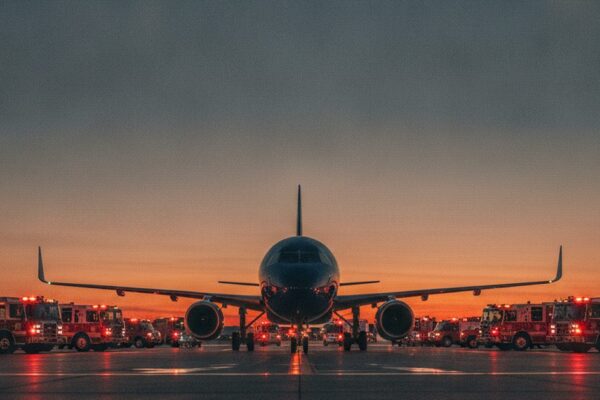
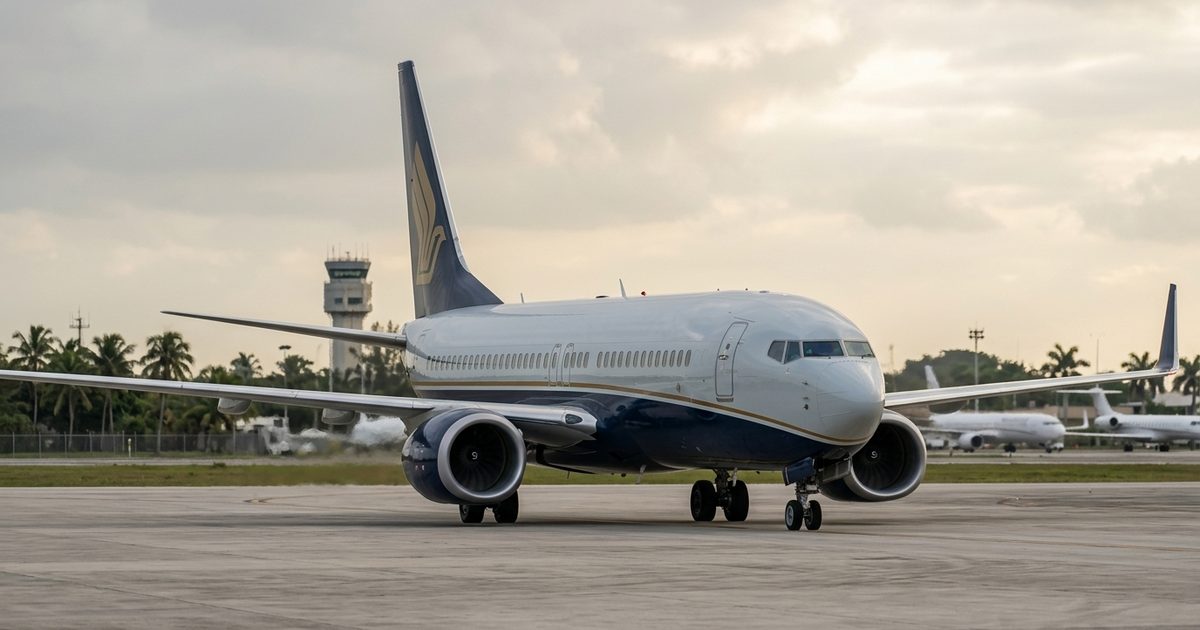
KUALA LUMPUR — A Singapore Airlines Boeing 737 MAX 8 suffered simultaneous tire bursts on both wheels of its left main landing gear during landing on June 13, immobilizing the aircraft on Runway 14R/32L at Kuala Lumpur International Airport (KLIA) for nearly six hours. An investigation is open and no official cause has been established.
Flight SQ114, arriving from Singapore Changi Airport at approximately 1:27 p.m. local time, carried 147 passengers and eight crew. No injuries were reported. The aircraft, Boeing 737-8 registration 9V-MBN, came to a stop near the runway midpoint and could not vacate under its own power. Passengers were bused to the terminal. Recovery crews towed the jet to a remote parking bay at around 7:15 p.m.; the runway was declared operational again at 7:40 p.m.
Kuala Lumpur Tire Burst: Both Wheels on a Single Gear Assembly Fail at Once
Simultaneous failure of both tires on a single main landing gear assembly is unusual in commercial aviation. Each main gear on the 737 MAX 8 carries two tires; the two-tire configuration provides redundancy against a single failure. When both fail at once, the aircraft cannot exit the runway normally and specialist recovery equipment is required.
Singapore Airlines confirmed to AsiaOne that the aircraft “had to be towed to a remote parking bay for repairs” and that passenger and crew safety was the airline’s “top priority.” The carrier canceled the return sector, SQ113, due to the aircraft’s unavailability. The jet was ferried back to Singapore the following morning as non-scheduled flight SQ9105, arriving at approximately 11:18 a.m. on June 14, and has since resumed normal service.
Investigation Open; FOD Among Factors Under Review
No preliminary or final investigation report has been published. Malaysia’s Civil Aviation Authority (CAAM) and the country’s Air Accident Investigation Bureau are expected to lead the inquiry, as the event occurred in Malaysian territory. Singapore’s Transport Safety Investigation Bureau (TSIB) is anticipated to participate in a supporting capacity, per standard bilateral practice between the two countries.
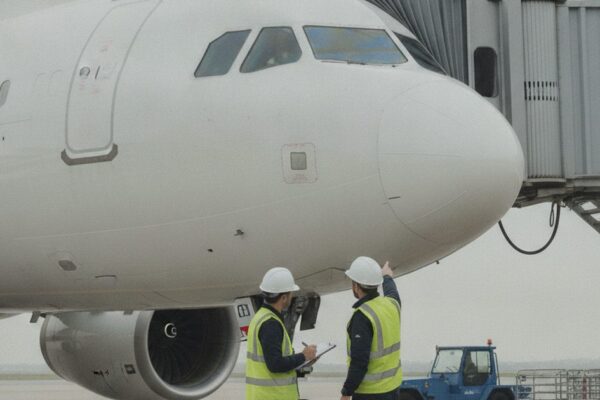
Investigators in any tire-failure case typically examine three broad areas: the condition and service history of the tires themselves, braking system data from the aircraft’s flight recorders, and the runway surface for foreign object debris (FOD) or pavement damage that may have contributed to the failure. The mandatory runway inspection completed during the six-hour closure has not produced publicly released findings.
A relevant precedent exists. Singapore’s TSIB investigated a near-identical event at Changi Airport on December 3, 2021, involving a different Singapore Airlines Boeing 737-8 MAX (9V-MBF). That final report attributed the tire damage to wheels locking under braking before full weight-on-wheels and speedbrake deployment — a mechanical sequence rather than a runway debris cause. Whether a similar mechanism or a different factor is at play in the KLIA event will be for investigators to determine.
A Growing Pattern of Runway Tire Events at Major Hubs
The KLIA incident is the latest in a series of runway-surface and tire events at major hubs this spring. On June 1, an exposed metal plate on Runway 05 at Tokyo Haneda triggered back-to-back tire blowouts on a Skymark 737 and a Japan Airlines 767, forcing a full closure and a debris sweep of the runway surface. In May, a United Airlines A321neo landed at Dulles with a blown tire, scattering rubber debris across the approach path. Each event required runway closures, debris inspections, and extended recovery operations.
The pattern illustrates a recurring operational reality at high-traffic airports: a single disabled aircraft, regardless of cause, can close a runway for hours and cascade delays across an entire regional schedule.
Hub Impact: One of Three Runways Down During Evening Peak
KLIA operates three runways. With Runway 14R/32L blocked from 1:27 p.m., air traffic controllers compressed arrivals and departures onto the two remaining strips during what is typically the airport’s busiest flying window. The airport operator issued a formal advisory at 6:35 p.m., warning of delays and directing airlines to a filed aviation notice that flagged the runway as potentially unavailable until 9 p.m.
Malaysia Airlines, AirAsia, and multiple international carriers that schedule dense evening banks through KUL all faced cascading knock-on disruptions that extended well past the runway reopening.
A preliminary investigation report from Malaysia’s accident investigation authority is required under ICAO standards within 30 days of the incident. FODNews will report on formal findings as they are released.
Stay current on runway safety and FOD incidents worldwide — subscribe to FODNews.
Sources
- AsiaOne — “Singapore Airlines SQ114 burst tyre KLIA” (June 2026)
- Simple Flying — “Singapore Airlines 737 MAX Bursts Tire Upon Landing, Shuts Down Runway For Hours” (June 15, 2026)
- The Rakyat Post — “Singapore Airlines flight suffers burst tyres at KLIA; runway closed for over six hours” (June 14, 2026)
- Aviation Safety Network — Incident 9V-MBN, 13 June 2026
- Singapore TSIB — Boeing 737-8 MAX (9V-MBF) Tyre Damage on Landing, Changi Airport, Final Report (December 2021)