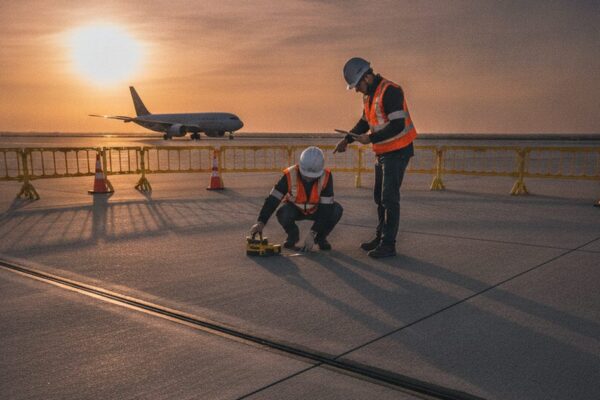

Three of aviation’s most influential international bodies launched a coordinated runway safety initiative on July 28, 2026. IATA, CANSO, and ACI joined forces in the industry’s most unified push yet to cut incursion risk at airports worldwide. Fatal runway incursions have drawn renewed scrutiny, and the timing reflects that pressure.
The timing is no coincidence. A near-collision at Boston Logan between Delta and American aircraft shows how fast a single navigation error can escalate on the ground.
Three Pillars of the Joint Runway Safety Initiative
The initiative organizes its work around three areas. First, it targets improved safety reporting and data capture — specifically near-miss events and precursor incidents. Frontline personnel often spot risks before formal reporting systems do.
Second, the initiative strengthens Local Runway Safety Teams. These working groups bring together airlines, airports, air navigation service providers, and other stakeholders. Their goal is to assess site-specific risks and coordinate action at individual airports.
Third, the program focuses on sharing effective practices across airports with similar operating environments. Solutions proven at one facility can then travel faster to others.
“Runway safety depends on clear communication and coordinated decisions across the airport environment,” said Andrea Sack, Senior Vice President of Global Operations at CANSO. “Strong Local Runway Safety Teams bring controllers, airports, airlines and other operational partners together to identify risks and agree on practical actions.”
Building on Global Frameworks
The initiative builds on the Global Action Plan for the Prevention of Runway Incursions (GAPPRI), which includes ICAO, EUROCONTROL, and the Flight Safety Foundation. The new joint program adds a coordinated operational layer on top of existing tools. Those include ACI’s Runway Safety Team Implementation Package, the CANSO-ACI Runway Safety Checklist, and IATA’s Runway Incursion Safety Risk Assessment.
“Airports sit at the center of this challenge, where every part of the aviation system converges,” said Darryl Dowd, Vice President of Safety, Security and Operations at ACI World. “Local knowledge and sustained collaboration are what turn safety guidance into real reductions in risk.”
Aeromexico Deploys Cockpit Collision Warnings Fleet-Wide
Four days before the joint initiative launched, Aeromexico announced a significant technology deployment of its own. On July 24, the carrier confirmed fleet-wide deployment of Honeywell’s SURF-A (Surface Alerts) system. The rollout covers more than 100 Boeing 737 NG and MAX aircraft.
SURF-A uses GPS data, ADS-B equipment, and software analytics to calculate runway traffic hazards in real time. It delivers visual and aural warnings approximately 15 to 30 seconds before an anticipated collision. Pilots see a “Traffic on the runway” message on cockpit displays. Honeywell describes the system as a “third set of eyes” during taxi, takeoff, and landing.
The system deploys as a software upgrade to Honeywell’s EGPWS and TCAS hardware already installed across the Aeromexico fleet. FAA certification across Boeing types is expected to begin later this year and continue into 2027.
“We designed this technology to give pilots the precious time they need to recognize hazards and take corrective action,” said Jim Currier, president and CEO of Honeywell Aerospace.
Data, Reporting, and the Technology Gap
The initiative’s focus on near-miss data connects to a broader push to deploy data more aggressively in runway safety. The FAA has been piloting AI-assisted analysis with Palantir at SFO, using machine learning to flag incursion hot spots before incidents occur.
That approach aligns with the joint initiative’s operational goal: turning raw data into predictive action. Better reporting feeds better analysis. Better analysis informs where Local Runway Safety Teams direct their resources.
Taken together, the IATA-CANSO-ACI program and the Aeromexico-Honeywell deployment represent two converging lines of runway safety work. One is institutional — building reporting infrastructure and collaborative frameworks. The other is technological — embedding warnings directly into cockpit systems.
What Comes Next
Neither program arrives with a single measurable target. The initiative’s charter focuses on process — improving how data moves, how teams function, and how lessons travel between airports. Aeromexico’s SURF-A rollout still awaits FAA certification before formally entering service on U.S. routes.
Together, the two developments signal that runway surface safety is being treated as a system-level problem. Coordination across regulators, airports, and cockpit technology — not just protocol updates at individual facilities — is now the standard expectation.
Stay current on runway safety developments worldwide. Subscribe to FODNews for coverage of the incidents, initiatives, and technologies shaping aviation surface safety.