SpaceX IPO Filing Warns Orbital Debris Could Render Starlink’s Orbits ‘Unusable’
SpaceX’s SEC registration statement warns that cascading debris collisions pose an existential risk to its own orbital business.
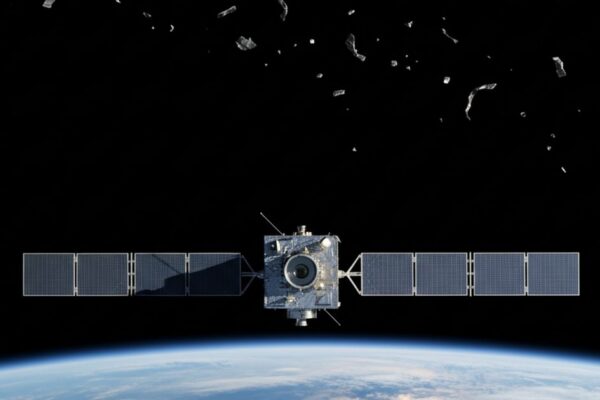
In its late-May Form S-1 filed with the U.S. Securities and Exchange Commission, SpaceX disclosed that growing orbital congestion and fragmentation cascades could render its Starlink orbital shells—and potentially others—”unusable for a considerable duration.”
The language, buried in the filing’s risk factors section, is a striking acknowledgment from the world’s dominant satellite operator that orbital debris poses an existential threat to SpaceX’s own core business.
The Cascade Warning
SpaceX filed its original Form S-1 with the SEC on May 20, 2026. An amended S-1/A filed in recent days carries the same risk disclosure: a collision “could initiate a cascading collision event, rendering our licensed orbits—and potentially others—unusable for a considerable duration.”
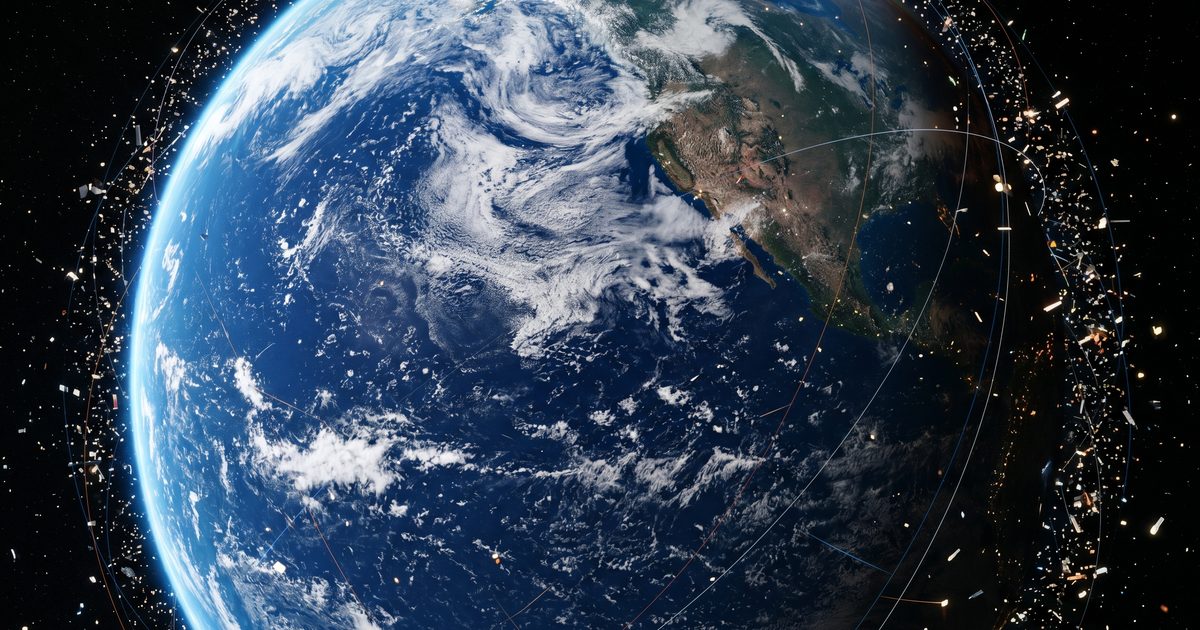
The scenario described is what scientists call the Kessler Syndrome—a self-reinforcing debris cascade in which each collision generates new fragments that trigger further collisions, making affected orbital bands inaccessible for years or decades. The S-1 does not use that term, but the mechanism described is identical.
The filing also warns that policymakers are debating liability frameworks modeled on environmental Superfund laws—a regime that could expose large constellation operators to retroactive cleanup costs—and that non-compliance with debris-mitigation rules could result in “financial penalties or the loss of licensing authority.”
One Maneuver Every 1.8 Minutes
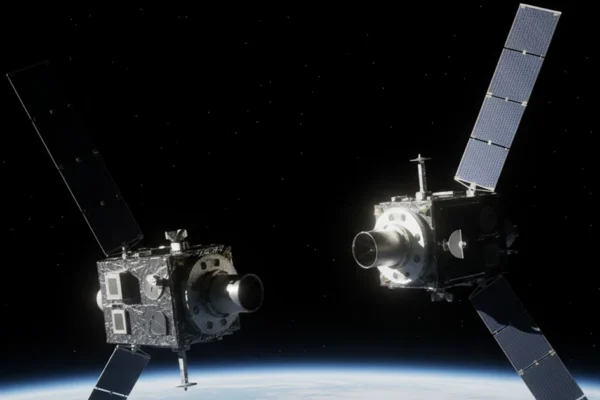
The disclosure arrives against a backdrop of rapidly escalating operational strain. According to SpaceX’s own FCC filings, Starlink satellites executed 144,404 collision-avoidance maneuvers in the six months between December 2024 and May 2025—roughly one maneuver every 1.8 minutes, around the clock.
A recently published analysis by the Economic Times noted that a Starlink satellite passes within 1 km of another cataloged object approximately every 47 seconds.
SpaceX’s maneuver threshold—set at a one-in-one-million collision probability—is roughly 100 times more conservative than the industry standard of one-in-ten-thousand. That makes cross-constellation comparisons difficult: many of those 144,404 maneuvers would not have triggered responses from other operators.
The Irony of Scale
SpaceX has become the single largest contributor to low-Earth-orbit congestion—roughly half of all active satellites in orbit belong to its Starlink constellation, with more than 7,000 deployed and FCC authorization for tens of thousands more. The company now discloses, in a document intended to attract public investors, that the environment it has helped densify poses a material risk to the very infrastructure it is selling.
Regulatory and Environmental Backdrop
The S-1 disclosure comes several weeks after the FCC declined to rewrite orbital-debris and spectrum regulations that SpaceX and Iridium had jointly sought to revise. That ruling preserved existing Big LEO frameworks, signaling that no near-term regulatory relief is forthcoming for operators navigating increasingly crowded orbital altitudes.
Those altitudes are under additional environmental pressure. Research published this spring documented that mass Starlink reentries are injecting aluminum oxide into the upper atmosphere, with the cumulative atmospheric burden now exceeding five metric tonnes annually. Meanwhile, elevated solar activity is accelerating orbital decay rates, compressing the already-dense population of objects in the lower LEO bands where Starlink and competitors operate.
What an S-1 Disclosure Means
Analysts note that the debris risk language carries particular weight because it appears in a regulatory filing with legal consequences for material omissions.
Risk-factor disclosures in an S-1 are legally significant because companies face liability for material omissions, giving them strong incentive to surface genuine threats to the business. By naming orbital debris in that section, SpaceX is signaling to investors that the debris environment is a business-level risk—not merely a policy abstraction—for an operator whose value rests on continued access to low-Earth orbit.
The European Space Agency’s Space Debris Office has tracked a sustained rise in conjunction events across the LEO altitudes where Starlink operates—roughly 400–600 km. ESA has called for binding international standards on constellation design, end-of-life disposal, and collision-avoidance coordination; NASA’s Orbital Debris Program Office has similarly warned that without active debris removal, the debris population in key LEO bands will grow even if no further satellites are launched. No mandatory international framework currently exists.
SpaceX has not yet set a pricing timeline or share-sale range for its IPO. The S-1 is the first public look inside the company’s finances and risk posture. For observers in the orbital-debris field, the most consequential disclosure may be less about valuation and more about what SpaceX is quietly acknowledging: that the long-term sustainability of low Earth orbit is no longer hypothetical. It is now a line item in a federal securities filing.
Subscribe to FODNews for independent coverage of orbital and ground-level foreign object debris.
Sources
- Space Exploration Technologies Corp., Form S-1/A, SEC EDGAR (filed late May 2026)
- Space Exploration Technologies Corp., Form S-1, SEC EDGAR (filed May 20, 2026)
- Economic Times — “Can satellites bump into each other? New crash clock study reveals a potential threat in space”
- SpaceIntelReport — Starlink performed 144,000 collision-avoidance maneuvers between December and May
- Aerospace America — “Heavy Traffic Ahead”
- NewSpaceEconomy.ca — SpaceX’s $26.5 Trillion AI Market (June 1, 2026)
- FODNews — FCC Rejects SpaceX and Iridium Bids to Rewrite Big LEO Spectrum Rules
- FODNews — Starlink Reentries Now Injecting 5+ Metric Tonnes of Aluminum into Atmosphere
- FODNews — Solar Max Is Accelerating Orbital Decay